Getting Intimate

Over the weekend, I was surprised to find myself completely immersed in a five-hour training on yoga, sex and intimacy. My confusion was justified – The title of the workshop was “Yoga is Peace.” Where did I go wrong (or, wonderfully right)?

Mark Whitwell is a famous yoga teacher (I use this phrase reluctantly, but if anyone deserves the title, he does) and writer who studied for twenty years under Sri T. Krishnamacharya, the guru (or teacher) graciously credited with introducing yoga to Europe, Asia, and the Americas within the past century. (Should your interest in yoga meaning and philosophy grow, his work is a great place to start…)

Mark began by introducing himself to the class and proclaiming emphatically:

“YOGA IS… [wait for it]…DIRECT intimacy…with reality.”

He followed: “Forget any other definition you’ve ever heard. This is Truth.”

Mark’s “no bullshit” approach to teaching struck a chord. Perhaps too tight of chord, as he later added in the words of his teacher, Sri Krishnamacharya: “Yoga is not information gathering.” (Tell this to the girl working 24/7 in yoga studies.) What he means by this, of course, is simply: It’s already in you. So, focus your attention there.

Regarding sex, intimacy and yoga, we can go back to Mark’s definition of yoga generally as “direct intimacy with reality.” But, what does this really mean? He elaborated throughout his lecture that, from this view, our purpose on this planet is to have intimacy with life; that means with yourself, your partner, your community, and more abstractly, with your reality. In other words: Are you engaged, are you open? Are you a good friend, a loving partner, a “yes” person? Do you serve others in your community, do you love the work that you do? We all prioritize our own reality differently, and where and when we choose to get intimate. But, as Mark suggests, shouldn’t it be that when the day is done we can stand back and see ourselves reflected back to us (ideally with love and admiration) in all aspects of our life? If we desire to hold a purpose, as individuals and humans, shouldn’t it be to live life this way? (In this light?)

Yoga is direct intimacy with reality, with life. In this way, we can practice yoga everyday, in every aspect of our lives, by allowing ourselves to get intimate in our interactions with others and with ourselves.

As for sex: Mark shared his own observation that, as the churches continue to empty throughout America and Europe (Germany, in particular), the explicitness and vulgarity of sex in the media and social discourse continues to worsen. He digressed: “Everybody’s talking about it, and nobody’s having it.”

In my own classes, reluctant attention has recently focused on the realities of the over-sexualization of youth, and women and girls generally, in society. How prevalent are images of young girls (teens & twenties) in their underwear – or without – throughout the media? (Are you as tired of the viral Kim Kardashian as I am?) But giving this issue our sincere attention requires an uncomfortable shift of reality, and so many – including myself – do their best to stay quiet and turn the other way. There’s no need to revisit the profound implications that over-sexualization have on women and girls throughout the country, and the world. Eating disorders, body dysmorphia, body image obsession, insecurities, anxiety, inadequacies, sex trafficking and even hate crimes targeted at nonconforming homosexual individuals – all catalyzed by an extreme prevalence of “sex” in society, distorting the reality that sex [and sexuality] is intimacy – not an ego trip. Having the capacity to love and be intimate with another person is a gift, and an expression of equal exchange. It’s personal, it’s impactful, and it’s the basis of humanity. It’s easy, with the Victoria’s Secret fashion show fast approaching, to forget that this is reality. 

Mark’s parallel to the international vacancy of churches is meant to emphasize the necessity of individual spiritual life for the proliferation of humanity. He even goes so far as to say that the world depends on it. I take spirituality in my own heart to mean the active cultivation of a greater consciousness, founded in love and compassion towards oneself, one another, and our shared global community (the Earth and humanity). My church is my yoga mat. But no matter your definition or your vehicle, Mark attests that exploring your own sense of self and your own true nature is to experience intimacy, and promote creativity and creation. And, to experience direct intimacy with reality [in this way] is yoga – with, or without asana. (Although he and I highly encourage a daily home practice as a guaranteed vehicle toward exactly that. If you’re looking to create a home practice but aren’t sure where to start, contact me for help creating your own personal practice.)

In the midst of a non-stop graduate school schedule, the holiday season, and occasionally being all too aware of worldwide struggle and despair (sometimes all-to-close to home), I’ve found it helpful to go back to the notion that our purpose is intimacy. We can forget the rest. Because, if you can be intimate with life by being authentic, kind and present in every moment of your day, you’re contributing to the world in the best possible way. And, inevitably the goodness of the world will come back to you, more easily and with greater pleasure than you ever imagined. I guess, you could say in this way: Yoga is Peace.

Exploring your own comfortable definition of spirituality and creating a routine to express yourself through this light (be it yoga, attending church, simply sitting in quiet or your own personal practice) is the key to experiencing direct intimacy with life. And while it’s true – you get what you give – ultimately, getting intimate is what really makes life worth living.

Sending love and well wishes to your corner now & always,

Amy

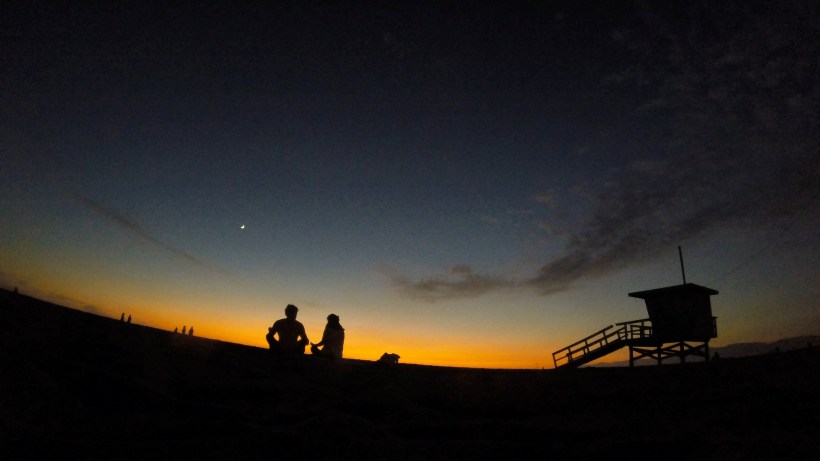
Personal Photo: Playa Vista, CA

It’s Your Year

Last week, I discussed yoga as a process of becoming.

This past weekend, I was exposed to exactly the sort of setting where you would expect the winds of change to come sweeping through: Off the Mat, Into the World’s 4-Day Advanced Leadership Training in Ojai, CA – of all places, my favorite place.

It was there that I felt very aware of a newness to myself, my being. Who is this girl, so lucky to be attending this workshop in this beautiful place? Who has such a strong, intuitive (asana) practice? Who speaks so confidently of her experiences in politics and global affairs, which have prepared her for this discussion in social justice yoga? Sometimes our process of becoming isn’t so pretty – and more likely than not, you won’t even know it’s happening. It’s darkness; it’s bitterness, fear, angst, and frustration. But in the inevitable moments of light that follow, you can look back on yourself and how far you’ve come, and realize gratefully that that whole time, you were just becoming.

Today I changed the name of my blog (and Facebook page) to “A Year in Yoga.” I did this because it’s never really been about “my year,” as I created it of and for all of you. I created this blog as part of a greater vision – for peace (inside and out), for justice (in the form of our own tolerance, acceptance and harmony), for empowerment (in understanding our own unique capabilities, our gifts, and finding the strength to live in that light). I have been so moved and inspired by the many women – and few men – who have reached out in response to my posts over the past three months, and shared a bit of their process with me.

It is important that the name reflects the fullness of this collective effort; to cultivate greater virtue in our lives is “A Year in Yoga.”

I was moved – or rather, moved myself – into the yoga community, in search of conversations surrounding the difficult questions: How do we stop the fighting? The destruction? The war, the hurt, the suffering? If it is innate in us to care for one another, at least when residing in close proximity, how can we work towards extending this sense of responsibility and compassion to the global community? To come from a place of love and to admit you are a work in progress is to live in yoga. No asana required. (Despite our Western spin, yoga is not the same as asana, or physical yoga postures. Simply living life truthfully, with compassion, patience and mindfulness, is living in yoga.)

We are all always in a perpetual state of change, growth and evolution, although we rarely realize. Approaching life with this awareness has its perks. Nonjudgment of yourself and others (ahimsa) is a practice which requires conscious cultivation, but ultimately takes the pressure off; allowing us to be more patient and easy on ourselves, and to have greater empathy toward others in acknowledgement of whatever war they’re fighting (or challenges they’re facing) themselves. This means acknowledging that you and I are both enduring similar, however very distinct, journeys toward becoming whomever or whatever we are intended or going to be. Here, we can relax in knowing that we can’t have all the answers.

Imagine what it would mean for families, for communities, for countries, for the environment, for your children (present or future), if everyone in the world approached life with nonjudgment and compassion toward themselves and others. You and I can’t change the world, but (a much larger, global) we can. We starts in communities, with individuals. All over the world, people are increasing their awareness and acknowledgement of the necessity for sustainability, for the preservation of our Earth, for future generations. Every yoga practitioner, protest attendee, business owner, community leader and politician who supports this cause, is a single “I.” I urge you to consider how you’re contributing to the inevitable change, growth and evolution that is becoming all around us, and in you. It doesn’t have to be here or there, right wing or left wing, working or upper class – you are individual, and your process is different from theirs or mine. But bringing a greater consciousness, or mindfulness to your daily life – to be present in acknowledging the impact of our daily choices and accepting responsibility for the effects of our actions and thoughts – is what the world desperately needs. The world needs you and me, because if not us, then who?

You’ve inspired me with your stories of success and struggle, because however personal and distinct from my own, I too feel the heaviness life sometimes brings and don’t want anyone to ever have to stand in it alone. This is empathy. This is peace, however small. And (despite the cliché), it starts with you. It really does.

I dedicate this venture forward, to you. It’s your year (in yoga, or however you choose to live it). And it’s time to start asking, “Who am I becoming?”

Be present, and you’ll know. I look forward to seeing all that flourishes.

Unconditionally here,

Amy

Drop the Baggage

A common theme of my last several posts has been the importance of feeling. And this morning, at a lecture and asana class with founder of Off the Mat and Into the World, Hala Khouri, she emphasized a similar point: “Yoga is a process of becoming – by feeling the sensations in our body.” By this she means feeling in the fullest sense. Yoga is about allowing ourselves to feel the discomfort, fear, anger and anxiety in our lives, of past traumas. Yoga is about letting things come up, feeling them fully for a brief moment and then, letting them go. She followed this idea with, “Of course, if we told people that yoga is all about “exploring your grief and misery,” nobody would come!”

How many people are affected every day by past traumas? We know how past traumas affect us personally, many of us living under the rule: Never make the same mistake twice. You live, you learn. And, like anyone, you pick up (or rather, pack up) a bit of baggage on the way. These past traumas soon surface in other ways. Body aches and physical tightness (muscle tension), depression, social anxiety, binge eating, domestic violence – and school shootings. Undoubtedly, our past shapes who we are in the present. So it stands to reason, that only once we’ve come to terms with the past can we be our happiest and fullest selves, in the present.

This is how yoga is described as a “process of becoming.” It’s about fully realizing your [True] self, or the best version of you. In the science world, yoga as a healing modality is increasingly considered a viable method of somatic psychotherapy. Recently, yoga has begun planting its roots in Western science, working its way into physical therapy, occupational therapy, psychology, counseling, and even physician’s offices throughout the country.

What happens when we feel? How much better can we be? Hala explained, for her kids feeling means running outside to the trampoline or hitting the punching bag, instead of hitting their brother. Rather, “This is progress.” To recognize a feeling in your body, instead of reacting impulsively or burying it away. To consider the best reaction – whether or not we express that emotion, and how. And to consciously choose a healthy way to release the feeling of tension, distress or anxiety from your body, without harming yourself or others. (Pretty impressive for a six-year-old! And a great example of applying mindfulness.)

To feel something in its fullest expression, to allow yourself to let it out, is to know yourself without the baggage. Whether it’s running over a squirrel (as was Hala’s recent trauma) or the death of a loved one, a car accident or betrayal by a friend – it’s often easier, and cooler, to just put it away. But when we hang on and never allow ourselves to surrender to what we’re feeling about a given situation, it shows up in other places. Insecurities, eating disorders, cheating, anxiety, depression, PTSD, OCD, perhaps even ADD. How different would our world be, if we were raised to express every feeling – in a safe, deliberate, mindful way?

Yoga is one way, but this kind of yoga is done off the mat. It’s a way of thinking, non-judgmentally and with compassion, patience and mindfulness towards yourself and others. It’s a practice and a process; it helps you let go and be free, to easily become our best [kindest, warmest, loveliest & most lovable, thinnest, trimmest, funniest, happiest, etc.] selves.

Everyone has trauma, small ones and big ones, that they carry with them. What are our real reasons for holding on? What happens when we let go?

I’m grateful to have the opportunity to explore somatic psychotherapy and yoga for trauma from the best in the field. My dream (in its ever-evolving form) is to bring this knowledge to all of you. Because how different, how good could our world be? Could our community be? Could our corporate leaders and politicians be? Could you and I be, if we dropped all the baggage and lived mindfully?

Dare to dream,

Amy
—————

For more on yoga & somatic psychotherapy – an interview with clinical psychologist, Bo Forbes: Narrowing the Gap Between Insight and Change: Yoga, Psychotherapy, and the Body

Photo: Point Dume, Malibu, California

Squash Rings & Sweet Potato Fries (Recipe)

Happy Friday, All!

As much as I love the summer, there’s something so special about the slow, creeping in of cool crisp air against the California sunshine. (It’s probably my East Coast roots…) Autumn is officially here.

Before I start work today, I wanted to share a new recipe in hopes that it might bring some joy (and deliciousness) to your corner of the world this weekend. I tried it out last night, and am still savoring the gratification of a new, healthy take on a favorite comfort food…

I’ve included some extra notes for your reference, and perhaps to introduce some new staples to your kitchen cupboard. I hope you – and those lucky enough to share – enjoy!

I give you: Roasted Squash Rings & Sweet Potato Fries (Serves 4)

Ingredients:

  • 2-3 Squash*
  • 1-2 Sweet Potatoes, medium to large size
  • 3 Tablespoons of oil (Your choice: I used olive oil I had previously infused with basil and garlic, but coconut oil, canola oil, or grapeseed oil are other good options)
  • 1 teaspoon of salt (Try sea salt or Himalayan rock salt, if you’re feeling adventurous – the latter is available at most ‘higher-end’ health food stores and packed with 80+ organic minerals)
  • Pinch of red pepper flakes (To taste – I overdid these a bit, which is fairly easy to do. Beware!)
  • Black pepper, freshly ground (Using a grinder is preferable to preserve its quality until consumption, but ‘table’ black pepper does just as well!)
  1. Preheat oven to 400 degrees and line two baking sheets with parchment (wax) paper, or cooking spray if unavailable.
  2. Slice each squash in half horizontally (to preserve circle-shape) and scoop out seeds with a spoon. Then, slice into ¼” rings. Cut sweet potatoes into halves, and then again as needed into small chunks. (They won’t look as clean cut as store-bought fries; see my photo above for shape and size reference.)
  3. In a bowl or plastic bag, toss squash rings and potato pieces with the mixture of oil, salt, red pepper flakes, and black pepper. Oil should just lightly coat ingredients.
  4. Place squash and sweet potato pieces in a single-layer on the prepared baking sheets and roast in oven 30-40 minutes, turning them over halfway through. Should be fully cooked and lightly browned on each side.

Walah! The perfect snack to cozy up with on your couch this weekend. Pair with your drink of choice (last night, for me, was red wine) and consume slowly, deliberately, and mindfully to fully indulge in what truly is a taste of the season.

Sending sunshine ❤
Amy

*I used Delicata squash, a long yellow variety; however, any squash should do. I’d be interested to hear your variations – Butternut Squash Rings?! Yes, please.

Thank you to my friends at Farm Fresh to You for providing this recipe for Squash Rings (originally adopted from Urban Chickpea) along with my produce delivery this week. The featured ingredient, Delicata squash, was also provided, perfectly ripe and newly picked from San Diego. Yum!

Reset & Let Go (+ Juice Recipe)

Two unlikely themes kept popping up in my conversations this past week: Juicing and Karma. This hardly seems like a compatible duo, but I was surprised (after closer consideration) that my conversations on both topics stemmed from the same concern: How can we get a fresh start? When we feel like our diets, our actions, or our temperament (mood swings, stress level, etc.) have spiraled out of control, how can we wipe the slate and move forward? Whether, the result of enduring a big life change or a big weekend out, letting go and hitting the “reset” button can be a welcome relief – and really, a necessity – to get you back on track, feeling better and more like yourself.

Karma-Juicing (verb): to enhance one’s actions by the process of purifying or resetting

I juice when I want to “reset.” Sometimes it’s after a few too many glasses of wine or slices of pizza, but other times it’s just when I’m feeling groggy and sluggish (or bloated). So, as you might guess, I like to juice most days – whenever I can. Because: a nutrient-packed [delicious] mug of green juice, when consumed semi-regularly (2-4x a week), helps give you more energy, boosts your immune system and cleans out your pipes 😉 So, food is digested easily and you feel lighter. And, as a result, when you do splurge on that pizza, the bloated sluggish feeling won’t stick around as long.

I still drink coffee, I’m learning to love tea, and I stock my fridge with pumpkin ale all season long. (Try Trader Joe’s Pumpkin Ale! So yummy.) Juicing doesn’t have to come solely as part of a “cleanse,” but it is still cleansing. Approaching juicing this way – drinking it when I want because of how it makes me feel, rather than how it could make me look – is empowering and effective, without being stressful or expensive. It’s nice to notice the difference in my body, to know how my body reacts to what I consume and how it likes to be treated. (Which really gives you more energy in the morning – coffee or fresh-made juice? You may be surprised…) Once you notice the difference it’s easy to eat healthily; you’ll do it because you feel better when you do. And, of course, because food is love and you, and your body, deserve only the best. There’s no limit to how often you can hit “reset.” (And it doesn’t have to be $10/day — see my recipe and recommendations below).

Resetting when applied to our daily lives can take on a different meaning. Have you ever wanted to just press a button and undo whatever you just said, or did (or wore)? Or even better, have you ever been confronted with a period of transition – a new job, a big move, a bad break-up, or settling into a new relationship – and just wanted to hit “reset” and reap the benefits of moving forward? I never paid much attention to this connection, or this urge, until a few recent conversations with friends, all of which centered on the same theme: Karma. More specifically, how karma – or our actions and behavior – is influenced by different periods in our lives, of light and dark.

*In this sense, “karma” is defined as one’s behavior or actions (versus the mainstream definition which is focused on the results or consequences of one’s actions); I also take “karma” to imply notions of one’s temperament, or general way of being. “Light and dark” can be thought of as life’s really high highs and really low lows, where you inevitably put forth your very best and very worst self (respectively).*

My friends and I discussed that, when you’re in a period of transition, you’re more vulnerable because your foundation has been disturbed or is suffering an imbalance. In daily life, this can take shape as a disruption at home, in relationships (family, love and friendships), and/or as general sense of stability and groundedness; in yogic and Ayurvedic terms, this refers more literally to Muladhara, or your root chakra. Regardless of the terminology, the resulting imbalance or turmoil while enduring periods of vulnerability and ‘darkness,’ directly affects our mindset, and thereby our actions on a daily basis. What you’re thinking and how you’re feeling (perhaps, in the broadest sense: anger, jealously, pride, love) determine your behavior and actions (whether you even apply for that job, move to that city, or can fall in love). When we feel our best and brightest, we live in that light and spread it to others. This way, periods of light and dark, or up’s and down’s, influence our daily behavior and way of being in the present moment – or our karma.

Sometimes, when we’re feeling like we’ve lost control, it would certainly be nice to hit reset. Luckily, yoga philosophy (namely in the Bhagavad Gita, a famously popular story and spiritual text) has an answer…In the Gita, Sri Krishna, cousin and charioteer to the heroic warrior, Arjuna, shares this advice before entering into battle. Among the many worthy take-away’s from this epic dialogue, he says:

“As the heat of a fire reduces wood to ashes, the fire of knowledge burns to ashes all karma.”

However eloquent, this statement – put simply – acknowledges the need to reset or let go of our past mistakes and hang-ups, and even offers a solution. Knowledge, specifically “self-knowledge” or striving to understand your Truth, is capable of burning away any negative lingering feelings – of anger, of jealousy, of pride – that stand in the way of moving forward. Dr. Chris Chapple describes this process of “burning karma” as putting your darkness on the table and asking [yourself] the hard questions. In yoga, detoxing can mean confronting your own feelings (often, on the mat) to purify, cleanse and reset your mindset and way of being, to move forward as – and ideally remain – a better person. All yoga practices (breath work or pranayama, asana postures, meditation and observing your own thoughts) prepare us and enable our efforts in this process; to reveal and confront whatever’s holding us back, hit reset (aka let go) and move forward as a stronger, happier, and more grounded person in our daily lives.

Hitting reset isn’t always the easy way, but – when it comes to our health and well-being – it is the only way. Bottling up negative emotions and bodily toxins has long-term effects on your overall wellness. Whether on your mat or at the juicer, I encourage you to make the investment – be it time, money or effort – to try resetting for yourself.

If, for you, this means taking the leap with at-home juicing, here’s my favorite recipe to get you started – full of warm, root vegetables, and simple Autumn goodness ❤

Autumn Spritzer
Makes about 16 oz.

  • 1 Sweet Potato (= 1 small or ½ large)
  • 1 Pear or Apple
  • 1 Lime
  • 2-3 Celery stalks
  • 3-4 Carrots, whole
  • 3-4 Kales leaves (or 1/4 bag, chopped)
  • Ginger root (~ 2-3 inches of root is plenty, less to taste)

*Try adding fresh Mint leaves and/or a dash of Cayenne pepper to reset and kick-start your metabolism

Remember, I urge you to use what you already have at home and make substitutions of similar ingredients to make it something you’ll enjoy! (i.e. lemon instead of lime, spinach instead or in addition to kale, [1] cucumber for [3-4] carrots, or take out sweet potato for a smoother consistency, to name a few…)

Preferably, drink in the sunshine, wearing a big cozy sweater (this is how I most enjoy it, anyway) – and drink through a straw, to avoid staining your teeth ❤

Now, that’s love. Enjoy!

With love,
Amy

Suggestion: If you are in the market for an at-home juicer, I would highly recommend a Fagor Slow Juicer. It was inexpensive among the high-quality brands (~$130 on Amazon) and has a 5-year warranty on all its parts. (Woo! Priceless…) If you’ve heard juicers are a pain to clean, you’d be right! But, just like anything, the more you do it, the faster you get and the easier it becomes. Some added incentive to rinse and repeat…

Hey, Good Lookin’

Early on in my teenage years, I received some valuable advice. While hanging at a (guy) friend’s house, he mentioned that his older sister was obsessed with losing weight. He relayed: “My mom says it doesn’t matter what the scale says, it matters how you feel.” As an impressionable 16-year-old, I could only assume his mother’s words were true. Regardless of why this mantra has stuck with me, I am ever grateful to have had it as I entered the age [or rather, decade] of body image and weight-obsession, myself.

Easier said than done – and for better or worse – I’ve always tried to let how I feel lead me. In the realm of weight loss, it’s interesting to note that we all have days when we feel gorgeous and sexy in our favorite size 6 jeans, and others when we loathe ourselves for wearing the same pair. I’d be willing to bet that on those days when you don’t feel good enough, it’s about the number – on the scale, at the store, or in comparison to others – or a reflection of how you’re feeling in other aspects of your life – you flunked a quiz, got in a fight with your boyfriend, or got blown off by your best friend. One negative thought, or instance, breeds many. (See Discovering Your Genius(!)) And it’s easiest to take all this negativity out on ourselves. If only I were thinner, more toned, had longer hair, were a smaller size. Then maybe I’d date that guy, go to that party, or nail that interview. But on those days when you’re feeling good, when all things are going your way, and you rock that size 6 like the hottest bitch in the club…nothing can touch you. And you don’t need a size 2, or anyone else to validate that you can do and be everything you want. What does this tell us? Another mantra I like to revisit in my own journey of up’s and down’s certainly applies here: It’s already in you. When you find yourself looking outside to feel better about yourself – to other people or to the scale – remember, that high you’ve felt before is always in you and nowhere else. (Although, speaking from experience, you may go broke and crazy searching…) It’s just up to us, when the low’s come around, to resist, remind, and rekindle the positivity within ourselves. Nothing else will do. Because, it’s all already in you.

So, with this in mind, I don’t like to spend much time dwelling on weight loss. If you’re happy, at any size, that’s all that matters. I also believe that the journey of weight loss is very personal. No one can do it for you. It can’t be bottled, or put in a pill. It has to be yours and ideally, to be successful, it should be full of activities you enjoy and foods you love. (Pick your poison – What new activity will you fall in love with? Yoga, hiking, kick-boxing, running, zumba, biking – there’s no wrong way, just your way.) As for eating, I believe maintaining a healthy weight without the drama (i.e. constant up’s and down’s of dieting) requires opening your heart and head to a lifestyle change, and learning about food. We’re bombarded with conflicting messages from the media, advertisements, documentaries, and Michelle Obama, advising us on the best approach to a healthy diet. But, I’ve found, when we simply go back to basics, eating well is easy – and intuitive. (Again, it’s already in you!)

First, I suggest getting in the habit of reading the ingredients of the foods you eat. I guarantee we spend more time researching our next big purchase, which movie to see on Saturday, or something about your Fantasy Football team (…trying to be gender neutral here, but that’s all I got), than thinking about the food we put into our bodies. The food we eat is directly responsible for fueling us throughout the day and protecting us from illness, now and as we age. Food also has the power to dictate our moods, energy levels, and even how much we break out, on a daily basis. (Pimples be gone!) You don’t need to put anything back on the shelf – not yet, anyway – but just read and acquaint yourself with what you’re putting in your body. It only takes a second. As you go, you may find that the ingredients listed in certain products, by certain brands, or at certain stores, please you the most. And remember, food is love – you deserve only the best (or the more horrid homage: your body is not a garbage can), and the better you eat, the ones you love will soon follow. [Side note: I have a huge crush on Trader Joe’s, but even there – read the labels! You’ll be surprised what you’ll find.]

My other big rule for healthy living (aka feeling good!) is: learn to cook. Ahh, I can hear the groans from cyber space, but wait just a second before I’m dismissed. I didn’t grow up loving to cook, and it wasn’t a big part of my up-bringing. But when I started living on my own, and wanted to control my weight – and reduce the anxiety I felt in finding something “healthy” among the greasy pubs and food trucks of Boston (however, delicious on occasion!) – I taught myself to cook. Here’s the thing, we’re all busy. I actually, really do believe that you have no time. I feel you, completely. But, I don’t believe you would say “Under no circumstances, will I ever cook for myself.” So I suggest, and challenge you, to create your own conditions. Under what circumstances, would you like to cook. (“Like” is important here – if you don’t enjoy the process, or the results, you won’t keep doing it. It has to be fun, and delicious!) Maybe it’s easiest for you to pack a lunch and snacks for work the night before, or the morning of. Maybe you’d prefer to cook yourself a big meal every couple days and keep the leftovers for lunches. (You can always get creative and jazz them up each time. For example, grilled chicken breast = dinner yesterday, buffalo chicken salad today, and Asian rice bowl tomorrow!) Find things you like to eat that are easy “go-to’s” for when you’re tired or feeling stuck. Under what circumstances would you brown bag it tomorrow? (Maybe buying yourself a rad new lunch bag would get you inspired.) As a loyal BYOL-er for many years, I’ll tell you it’s cooler than you’d think. Impressing people with leftovers has never been easier, in the age of $5 all you eat buffets. But the point is – Food is love. And once you start learning about the food you eat and cooking (some of) your own meals, you’ll discover you’re feeling better – you have less anxiety over what to eat and what you’re eating, more energy, fewer pimples, and more confidence because – Damn, you cooked that yourself?!

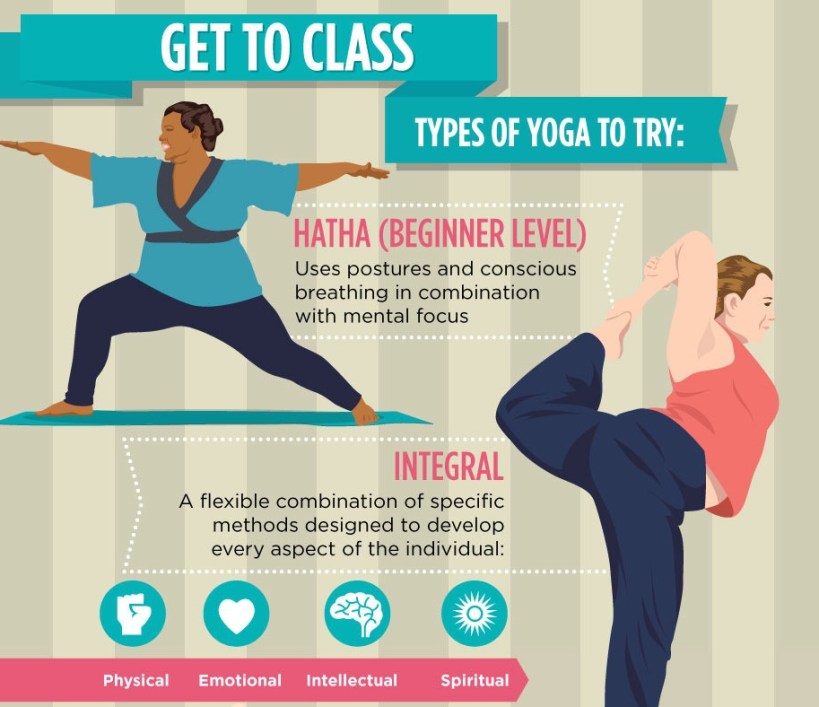
I recently received the following info-graphic for “Plus-Size Yoga” and wanted to share it with all of you. No matter your pant size – now or down the road – yoga is good for you. It feeds your physical body and psychological being in ways that allow you to feel better – crave healthier foods, have more energy, lose weight and live longer. This graphic does a great job at explaining some of the scientifically proven, medical benefits of a regular yoga practice, demonstrating specific postures which have real benefits for everyone, at all sizes. (Photo Credit and a BIG “Thanks” to Aldo Baker and Alight for spreading the word!)

I’ll check back in soon with my take on “juice cleansing” as a self-proclaimed once-a-day juicer and former juice bar employee (+ my own recipe for at-home juicing!). There’s no better place to take on the craze than out here in L.A. – I look forward to sharing what I’ve found!

Rock on,
Amy

plus-size-yoga


Discovering Your Genius(!)

“To believe your own thought, to believe that what is true for you in your private heart is true for all men – that is genius. Speak your latent [inner] conviction, and it shall be the universal sense [agreed upon by all].” 

I have the pleasure – and honor – of crafting a comparison for my Foundations of Yoga Studies midterm essay, between Ralph Waldo Emerson’s essay Self Reliance (introduction referenced above) and the Katha Upanishad,* one of the “principal thirteen” Upanishads which include many essays and poems written by ancient Vedic priests, and is one of the initial documented forms of yoga dating back to ~ 1st century B.C.E. I chose this topic because, remembering an experience in middle school when I was first exposed to Emerson’s Self Reliance (or more accurately, an “Ah-ha” moment), I recall telling people afterwards that it was my “favorite book” (embarrassing) – But, to tell the truth, I don’t remember a thing about it. I’ve heard of comparisons between Vedic [ancient yogic] philosophy and Transcendentalism – i.e. 19th century C.E. Thoreau (Walden) and Emerson (Nature, Self-Reliance) – so why not take the opportunity to revisit an old favorite?

A favorite verse from Self-Reliance, and one that I think aptly captures the key similarities between Transcendental and Yogic philosophy, is:

“To believe your own thought, to believe that what is true for you in your private heart is true for all men – that is genius. Speak your latent conviction, and it shall be the universal sense.”

Although I have an obvious bias – really, more of a crush on – well-crafted rhetorical persuasion as a student of politics, something about these words resonates with me on a deep and profound level. And, as Emerson states above, he would bet that this resonance has the potential to strike everyone the same way, as “is true for all men,” we’re innately and equally capable of harnessing our inner “genius” (or in yoga philosophy: your personal truth or [big-S] Self). “Speak your latent conviction, and it shall be the universal sense.” I read this as a command – and think it should end with the proper exclamation(!). With Emerson toting a blue-ribboned ponytail and GW-type swag, balking back on his horse, I imagine him saying, perhaps with a megaphone: “Go forth! And be, unapologetically, you!” Trust your gut! He says. It sounds so simple, but its difficulty is revealed when we take a moment to sincerely consider how we are (what we think, do, say) on a daily basis. Going through the motions of work, school, homework, meetings and travel – it’s easy to get swept away with the current and fall into a routine. But, when you pay closer attention to your interactions and thoughts throughout the day, how many times do you say something or agree with something simply out of habit or ease? (When in truth, it may have been in opposition with your true “gut.” That’s alright, we all do it!) It’s easier, even habitual at times, to “just get through” the day. But if nothing else, it’s interesting to consider how we might be inadvertently stifling our own voice, and succumbing to negativity in this process. Emerson’s advice: Trust Thyself.  Find your genius in the genuine. Or the modern adapted version: Go forth and be fabulous!

Our thoughts are powerful. Last week, I provided some insights into the “Yoga & Neuroscience” and want to share another related concept. For every negative thought we hear or think, it takes five positive thoughts to get back to normal/neutral from the resulting mood imbalance – just like momentary depression. This is scientifically proven as an evolutionary survival reflex, and is referred to as our innate “negativity bias.” (More on negativity bias here.) I mentioned last week, that thoughts – according to neuroscientists – are actually a group of connected neurons in the brain, that together form a single thought or idea. Repetition of the same idea or thought over-and-over strengthens this connection, so the more often we think (or say) something, the more likely we are to think it again. Considering this, and considering how much – scientifically speaking – a single negative thought brings us down, it’s apparent that its advantageous for our well-being to pay attention to what’s going on in our noggin. When we start to recognize our own internal “negativity bias,” we can begin to change our thoughts from a predominantly negative to a positive spin, or worldview. And, the good news is, just as negative thoughts strengthen and recur with repetition, so do positive thoughts. (All thoughts follow this rule – What have you been thinking about a lot lately?)

“To believe your own thought, to believe that what is true for you in your private heart is true for all men – that is genius. Speak your latent conviction, and it shall be the universal sense.” 

Trust yourself (and treat yourself)! Be open to hearing yourself out and making yourself heard. Stay positive, especially when it’s difficult, because you’re creating a path to follow in the future. And seeking what’s easy is understandable, but living your truth is genius! (Just sayin’…) This is also, living in yoga.

Emerson has inspired my week, having set the intention to live by his motto: “Trust thyself.” In recalling the negative thoughts which have occupied my mind lately, it’s clear that my own doubt and fear (the antithesis of trust) are most at fault. Once we get passed this depressing duo, or overcome our negativity bias, how many more positive thoughts will we think? How happy can we be? I intend to find out. What’s your intention this week?

With love,
Amy

———–

*Katha Upanishad (pronounced in Sanskrit: “Kat-a,” like Immanuel Kant without the “n”)

In case you want more on negativity bias:

– Dr. Rick Hanson discusses the neuropsychological basis for “Confronting the Negativity Bias” as an evolutionary survival tactic, and how to overcome it.

– Check out this NY Times article which discusses the importance and benefits of overcoming your “negativity bias,” and its impact at work and in your everyday life.

^ Excerpt: “The more you’re able to move your attention to what makes you feel good, the more capacity you’ll have to manage whatever was making you feel bad in the first place. Emotions are contagious, for better or worse. It’s your choice.”

Photo Credit: Personal photo of a surf(bill)board outside a cafe in the Nicoya Peninsula, Costa Rica.

The Missing Link: Yoga & Neuroscience

This weekend, I found the “missing link.” As part of LMU’s Masters in Yoga Studies curriculum, there is a pre/co-requisite to enroll in one of several certificate programs. I was excited to enroll in the pilot year of “Yoga, Mindfulness and Social Change,” which features renowned speakers from all over the country with varying expertise within the field. This weekend’s topic was “Yoga & Neuroscience,” and although I’ve always been intrigued (perhaps hereditarily) by psychology and sociology, I was taken aback and truly blown away by the evidence modern neuroscience provides of the true benefits of yoga.

As you might remember, my hope and mission in this program is to discern the socioeconomic benefits of yoga, within a global context. This interest came about through years of courses and hands-on experience in sociology, communications, media relations, cultural studies and international affairs, through which I developed a deep-seated interest in what makes people think the way they do – both as individuals, and as a collective society. Academically speaking, my pursuit is an exploration of individual ideological formation (aka consciousness), as well as of institutionalized methodologies of ideological pervasion. While in college, I was blessed with unique opportunities: to study the pervasion of local culture through public and mainstream media in Australia; to explore (and publish a manuscript on) gender disparity in Latin America as it relates to pervading machismo attitudes and state-controlled transmission of democratic ideals (see “About Me”); and, after college, to work for several years in politics and government affairs for non-profit and private, small and large organizations – to better understand what makes us and others, especially those in “power,” think the way they do. And, (surprisingly to me as well) this journey has led me to yoga studies. Mounting evidence supports my personal belief that yoga, over all other modalities, has the greatest potential to positively reform individual and collective ideology – thereby helping us live happily and helping communities live peacefully, everywhere. Imagine that.

This weekend, I attended two five-hour lectures on “Yoga & Neuroscience” by leading neuroscientists in consciousness formation (see “Lecture Credit” below), and soon found that scientific evidence already supports that yoga, meditation and mindfulness practices stimulate and even grow the part of the brain responsible for processing feelings of compassion, empathy, altruism, interconnectedness and happiness – otherwise known as the “neocortex.” Specifically, I learned that practices such as yoga and meditation, as well as Tai Chi and nature activities, help stimulate the brain’s neuroplasticity, or its capability to grow and reshape itself through the movement and connection of neurons. (More simply, neuroplasticity states that the brain is not a fixed form, but is in fact adaptable.) As a result, these practices in particular have been proven to expand and increase activation of the neocortex and overall brain capacity, as well as physically enlarge areas that promote feelings of empathy, compassion and altruism – collectively called our “emphatic response.”

However nice this all sounds, it may feel a bit displaced, as our society currently embodies a paradigm – or pervading ideology – which disproportionately emphasizes the “reptilian” brain, or the part of the brain responsible for primal instincts, basic survival needs, ego and competition, rather than cooperation. Many practitioners and professionals (and scientists) who have been imparted with this knowledge also believe that we [the human race] are in the midst of an evolutionary shift towards global cooperation. More candidly, they articulate a resounding belief that mankind must either learn to cooperate and live harmoniously with one another and with Nature, or fall victim to the harsh realities of disconnectivity and competition (i.e. global warming) for generations to come. As such, we notice widespread discontentment and rebellion in the form of protests, political stalemate and corruption, and civil war around the world and in the States, at levels unprecedented since the last major paradigm shift occurred in the 17th century (following the Industrial Revolution). It’s worthy to note my own belief on this issue is still evolving as I gather more information, and I encourage you also to ask the hard questions and think critically about this and all information you hear about the future of our planet. But, I do believe strongly in the agency and power of individuals to incite change in themselves, and in the world around them; be it on Capitol Hill, in the classroom, or on their yoga mat. And I hope to continue to explore the empirical evidence available now, and that yet to be discovered, which enables us to better understand how yoga, meditation and mindfulness practices benefit you and me, and (why not…) the rest of the world.

On that note, I’d like to dedicate a thought (or several) in recognition and gratitude of Mother Nature and the vast resources and opportunities she provides us: as humans, as Westerners, as yogis, as wilderness explorers, or from whatever perspective most resonates with you. It can be something as simple as a sunset, or as vast as the algorithms of consciousness and science we seek to understand. In solidarity, give thanks!

Peace – Shalom – Om Shanti,

Amy

Videos to Watch:

The Empathic Civilisation (10 minutes: 30 seconds)

How Meditation Works: For Beginners (2 minutes: 50 seconds)

Lecture Credit:

Dr. Jay Kumar (9/27/14)

Dr. Louis Cozolino (9/28/14)

Photo Credit:

Sunrise in the Outback, Alice Springs, Australia (Personal Photo, July 2009)

Work Hard, Play Hard.

In my previous posts, I’ve talked about the importance and “beauty” of finding yoga on your mat – particularly in those moments when you find your “yoga high” and perhaps even experience a state of pratyahara (withdrawal of the senses, as awareness draws inward). We treasure these moments, because they are so few, and reconcile with ourselves that they can only be fleeting. But – ah ha! – what if it were possible to live in yoga, even when you’re off the mat?

If you haven’t heard the phrase “living in yoga” before, please allow me to introduce you. Living in yoga does not mean living in a perpetual state of pratyahara, perpetually withdrawn from the outside world – though some, very traditional yogis choose this path of renunciation. Rather, it means applying basic yogic principles (revisiting the eight limbs = yoga’s “code of ethics”) and practicing yoga as “the science of the mind” on a daily basis, by carefully observing your own thoughts and choosing your words (and thoughts) with care and intention. How nice of a notion. Of course, we know that though yoga is sweet, life is not that simple. So, often times, the “living” part gets in the way.

This week, I can certainly relate to the feeling of having to surrender to life – in this case: my schedule. I love school. I love yoga. Grad school for yoga? Sign me up! But somehow in the midst of two weeks of non-stop events/classes/studying (all of my waking hours) my enthusiasm waned, and life took over. And suddenly, it wasn’t so fun anymore.

In talking to fellow classmates and checking in with friends who are building their own professional careers (from event planning, to accounting, sales and yoga!), I began to notice a theme: Surrender to our schedules – to life – in a non-stop whirlwind of meetings, parties, and events all designed to achieve balance (to some degree) and overall success. These are great goals to aspire to, even admirable. But wouldn’t it be nice if we could get there without feeling like we’ve lost control along the way, and that our lives are driving us? When do we get to stop running and just enjoy? (And don’t say: retirement. Although that should be enjoyable too!)

Living in yoga, your schedule remains the same and your obligations and deadlines are just as urgent. But, instead you commit to living more fully in everything you do and allow yourself to stop and smell the roses – today (no waiting)! This is as lovely as it is challenging, because living in yoga also means devoting greater consciousness to your daily life. By being aware and observing your own thoughts and actions throughout the day, you aspire to live in the present moment with compassion and authenticity. This means, allowing yourself to take one thing at a time. And not only do it, but enjoy it.

This also means making a concerted effort to make time for you, to do what you love – even, and especially, in the midst of chaos. (The picture above was taken this past weekend when I showed my close friend, Laura, my all-time favorite spot* during her first-ever trip to California!) There is nothing more cherished – or important – than memory-making…

As my boyfriend ran out of the house to work this morning, we reviewed our schedules for the day, both with a looming fatigue already at 8:00am. (Whenever you think you have the craziest day ahead, there is someone with one even crazier…) But together, we reached the conclusion: “Well, you can only be one place at a time.” All you can do is the best you can, where you are – and do your best to enjoy it!

In my morning meditation today, I set the intention to bring awareness to the present moment as I go forward into the weekend and coming week, so that I can relax and enjoy all that’s in front of me instead of feeling bound and overburdened. This, like anything, takes practice. But is there anything more worthy of working towards? Being present means listening actively, expressing gratitude, sharing your ideas confidently, and enjoying life – as it is, how it is, right in this very moment. This is, at its simplest, living in yoga.

There are only so many hours in the day. You can only do one thing at a time. So, just do what you can. And enjoy it!

Gives new (& better) meaning to: “Work Hard, Play Hard.” Go forth, and play!

Namaste,

Amy

*photo taken at my favorite peak on Foothill Trail in Ojai, CA

Be Bold, Be Beautiful

Entering into the “world of yoga” can be intimidating. Especially in Los Angeles and especially in your mid-20’s, there’s a lot of pressure to achieve a certain standard. To add to this pressure, I’ve primarily developed my personal practice and knowledge of yoga by teaching myself at home.

In grad school right now, we’re learning in detail about the different types of guru-student relationships – characterized by one-on-one mentorship from a “teacher,” in this sense, spiritually focused – that are so essential to understanding and developing a personal yoga practice, in keeping with yoga’s historical and traditional integrity. However, the reality is that the rapid growth in popularity of yoga among Westerners today (especially in the States) has largely diminished concern for consistency in the traditional practice of yoga, simply out of necessity. In the interest of “reaching” as many people as possible, yoga teachers and studios aim to pack their [increasingly, hot] rooms to capacity. This leaves many intermediate yogis who have grown to feel and appreciate the deeper benefits of yoga, lacking the classically acclaimed direction and guidance necessary from a “teacher” to enable their development from intermediate to advanced; or, more specifically, to harness the full benefits of yoga in the truest sense, enabling cultivation of utmost strength, happiness and longevity.

I acknowledge and respect that not everyone who is interested in yoga seeks or expects any psychological or spiritual benefit. (I started with Bikram, remember?) But for those who have recognized a shift in thinking since beginning their practice, or might in the future, it’s natural to yearn for greater nourishment – perhaps, a teacher training – to explore the full scope of your evolving practice. While Westerners continue to sort through this puzzle of adapting traditional Eastern practices into modern Western society (big things to come from my wonderful peers at LMU!), it’s important to keep in mind for your personal practice, the integrity and real purpose of yoga – and not to let the pressure get to you.

If you’ve “followed” any yogis on Instagram lately, you’re likely familiar with the pressure I’m talking about. The intimidation factor that has made its mark on yoga in the West emphasizing achievement in yoga as equivalent to obtaining physical strength and a glamorous physique. (I recently saw the winner of an Instagram yoga contest posted a picture of herself in wheel pose, perfectly toned, in her bra and panties…) So, in order to be credible in the “yoga world,” you need to be able to stand on my hands, touch your feet to your head, and jump through a ring of fire (naked)? Props to those girls (& guys), but I’m not sure that’s for me, and if I’m a beginner, this might make me think yoga’s not for me. Sometimes, like many others I know, I’ve put down my phone after an intense scrolling session and decided: “I’ll just practice later.” I lost my yearning in a wave of feeling that my practice was inferior; this, of course, being the antithesis of the very virtues we’re trying to cultivate in yoga: of confidence, of feminine power (shakti) and of unconditional love.

However, those images are only one perspective on “beauty” and honestly, though they are beautiful, I think they’re overplayed. Where’s the color, the fun, the creativity, the authenticity that truly characterize yoga? Have you ever laid in child’s pose and allowed your breath to takeover, losing sense for a brief moment of your long “To Do” list, and with it, the arguments and disappointments of the day? Finding this kind of calm in an otherwise hectic day of work and errands; that is truly beautiful. And the ease and accessibility of this posture – that anyone, anywhere, of any age, race, or orientation, can achieve this benefit (or, “yoga high”) in child’s pose – That is beautiful.

All this to say, whether in your yoga practice or out in the world, you should feel free to be, do and live as you are and where you are, today. This is your life, and there is no right way. That applies to your yoga asanas, Instagram posts, professional trajectory and personal interactions. There is a healthy way, a kind way, and an authentic way – but not a right one. Don’t let others’ standards (with their fancy handstands or boardroom presentations) make you think any differently about yourself, and what you could or should do to succeed, and to be valued. You are valuable, and your contribution is already great, whether you realize it or not – as long as it comes from a place that is genuine. Thinking boldly in this way, nothing can stop you. And more likely than not, you’ll be surprised by just how much you can do. Sometimes, I’ve learned, we are our own best teacher.

Next time you practice, whether in a class, in your bedroom, or in front of your television, remember that there’s more to yoga than handstands and that there’s more to you than meets the eye. And allow this awareness to inspire you, in all aspects of your life.

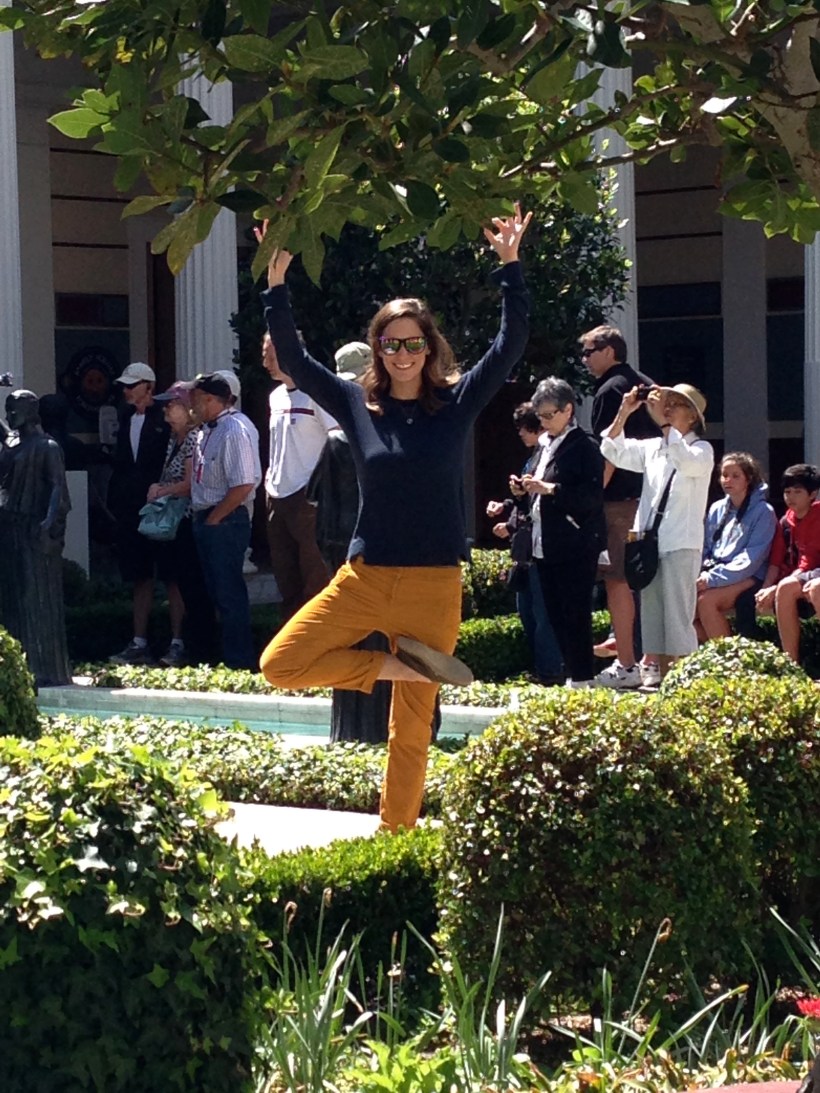
I also challenge you to post a picture of yourself on Instagram, Facebook or Twitter in your favorite, simple yoga posture (mine is tree pose – above!) as a friendly reminder to everyone out there that there is real beauty in simplicity. You just have to be willing to change your perspective. 

Be bold, be beautiful Xx

Amy