New Years Revelation

It’s New Years resolution time. A time I remember greeting with promise, hope and great expectations, this year, seems a bit more daunting. It might be that I’m growing older – which was no more apparent than while suffering the day-long consequences of enjoying one drink too many at a holiday party last week (my 21-year-old liver is no more…) Or, it might be circumstantial – following my first semester in grad school, I already find myself searching for the light at the end of the tunnel. (While I won’t say it’s all darkness ahead, I will say I can’t yet see the light…)

Of course, it could also be that my year as a yogi has changed my perspective.

In the midst of the holiday season and a particularly stressful time in my life, I’ve been seriously craving some clarity and some reprieve, which has led me to consider how my mindset is impacted by dwelling on the choices I’ve made in the past and on my anxiety for the future. As you’ve likely heard before, the practice of yoga is about bringing your awareness into the present. I recently read in James Fowler’s “The Present Moment” that the practice of meditation can even be simply defined as an act of “love for the present moment,” (as well as for the love of Truth, of Beauty and of Goodness – such a beautiful sentiment, I’ve recently incorporated into my practice/daily intention setting). And Yoga Journal recently shared that the key to happiness is to stop planning for our ideal future, and to shift our focus on living today, in this moment.

As these seeds were planted in the back of my mind, the time was right – and ripe – for a revelation. And sure enough, as often happens during my daily practice [of asana and meditation], a single thought swept through me and helped assuage my fears and anxieties for the coming year. Just like that…Not a resolution, but a New Years Revelation:

You have everything you need.

Soaking in the peace of mind that comes along with this resonance, I realized I need a re-prioritization this coming year – Not a ‘quick fix’ solution, or yet another brilliant addition to my busy schedule, as I often associate with a resolution. I already have it all, but my current mindset consumed by back-peddling and negativity isn’t serving me, or allowing for all the Truth, Beauty and Goodness of the present moment to shine through, to really enjoy it. Although I usually avoid getting too personal (because after-all, A Year in Yoga is all about you!), I hope that sharing more of my revelation with all of you might help plant the seed to inspire your own, for a happier, brighter, more content and gratitude-filled year ahead…So here it goes ❤

 My Priority List for 2015:

  1. Self-care. Much of my work in Yoga Studies thus far has centered around healing and trauma, and what I’ve come to learn is that everyone is healing from some sort of trauma (big or small) – and it’s not our job or our right to evaluate how deep, how harsh, or how justified someone else’s trauma, or journey is. I can’t be any good at my job, in my relationships, or even in my yoga practice, without taking care of myself first. (A lesson I can attest, I’ve learned the hard way.) For me, this means allowing myself time and space. Time to breath in between an all too hectic schedule, even if this means telling someone else you’re unavailable. (Sorry, I’ve got a date with myself tonight!) And space: a few moments of solitude, a clean environment, and at least an hour a day when I’m totally unplugged. Create your own rules, or don’t. Whatever it takes to give yourself the attention you need to heal from whatever hurt you’re holding onto; to rejuvenate, to flourish. You’re no good to anybody, until you’re good to yourself; and life is, along with many other [beautiful, wonderous] things, a process of healing.
  1. Love. I have to admit, this is a new list-topper for me. I’ve always loved the idea of love, but I’ve never wanted to make it a priority. It’s simply too scary. The moment you open yourself up to love, you create space for rejection and loneliness. It’s much easier to be alone. Much easier, but empty. And certainly no less lonely. This kind of love doesn’t have to be with a significant other, it can be for a family member, a best friend, even a furry companion – but it is that pitfall, head over heels, unconditional, crazy-expressive-passionate kind of love; that fills your heart until tears well up in joy, and makes you equally as vulnerable to hurt and despair at its loss. If you’re lucky enough to have experienced this kind of love, you’ll likely also agree that it’s simply this feeling that makes life worth living. It gets you out of bed in the morning, keeps you going when you’re running on fumes, and picks you up when you (inevitably) trip over your own feet and fall on your face. While yogis aim to embody detachment, this kind of love is the only exception. To love whole-heartedly and steadfastly, to love all living things this way is a yogi’s primary goal. Because only by loving this way can we achieve happiness, and can we find peace, in our lives and for others. I am so very blessed to have an abundance of love in my life. Really, what else is there to want? But putting our own ambition, or other priorities ahead of love means abusing it. It’s a two-way street. Let the love in your life come first and guide you, and you will have a life full of love – and therefore, at its very core, of happiness and peace.
  1. Stability. Of course, even with love and self-care, we all need stability in our lives to do anything more to function in society. (Consider: Maslow’s Hierarchy of Needs) Having grown up blessed with a strong foundation of stability, I ventured out over the past several years for a taste of challenge, of hardship (though not explicitly so at the time). I had something to prove, to myself. If I wanted to serve populations who had less than me, then I felt I needed to know what that really meant – and even what that felt like. Studying abroad in a third world country, working full-time for minimum wage, and immersing myself in homeless, low-income and prison populations; these choices have undoubtedly shaped my life. I say so with full recognition of how privileged I am to have made these choices – sprinkled after and in between my private college education, graduate coursework, well-paid jobs and refused opportunities. But what I’ve learned, however difficult at times, has been invaluable. Stability to me, represents a strong support system and enough financial resources to provide a home, pay the bills, and put food on the table (which varies in feasibility based on location and skill-set). When one of these areas is lacking, our whole being is at risk. The love and self-care we’ve worked so hard to cultivate is threatened, and we’re unable to do much more than run in place, and just “get by.” Evaluate what makes you feel stable; what’s your springboard for growth? And be so grateful for it. Nurture it. Cultivate it. Cherish it. This is also living with present awareness for all that we already have, and a goal of mine for the coming year.
  1. Be. And the rest will come. I can spend today, tomorrow and next year conjuring up my next project, worrying about my final exam, mulling over my past mistakes, and yearning for the light at the end of the tunnel. But at what cost? Too often stress and anxiety overshadows our ability to experience, enjoy and live in the present. By living this way, we risk losing a sense of ourselves and of those we love. When we finally achieve whatever it is we’re after, or perhaps just get tired of the chase, who will be there with us? What kind of shape will we be in – our physical bodies and our mental well-being – when we get there? Will we really be able to enjoy it, or will we already have our eye on the next prize ahead – an even bigger house, a more expensive car, a promotion, another degree? What about right now? Wasn’t there a moment when we dreamed of being right here? Relish it. We’ve all worked hard and learned tough lessons, jumped over hurdles and slayed dragons to be here – and here we are. We’ve worked so hard to be right here. So, we better enjoy it – You never know what tomorrow will bring.

Instead of thinking about what you should add to your life in 2015, I encourage you to consider all you already have. And challenge yourself to have your own New Years Revelation. To re-prioritize what really matters to you, at this point in your life, and allow that to be your mantra and your intention for the coming year. And strive to just be with it.

Sending boundless love and well wishes for a safe and very merry new year to you and yours. Cheers to all that 2015 will bring!

The light in me honors the light in you.

Namaste,

Amy

Photo: Throwback to New Years 2012 with my BFF Ashley at Lansdowne Pub Fenway Park in Boston. Thank you, Ashley for being there through it ALL and for always letting your light shine – & for always encouraging and inspiring me to do the same ❤

Happy Holidays! (Your Asana Cheatsheet)

Wishing all a very happy holidays this season!

As we look forward to food, family, and fun over the next couple days, I wanted to offer a few quick and very easy asana postures for an energy boost and peace of mind in the midst of what can be a very busy and stressful time.

Here are a few of my favorite postures that I practice regularly and often incorporate into my classes. They can be practiced in sequence or on their own, whenever (and wherever) you have a couple minutes to spare. Accompany each with slow, deep breathing and – if you like – while repeating the mantra: “Love of the Present Moment” (or whatever phrase resonates most with you. Others might be: Let Go; Peace; Love; or Om Namah Shivaya translated as “I am Shiva,” meaning “I am the light” ^^ link to my favorite rendition by Steve Gold)

Whether practiced before bed, in the kitchen between cooking prep, or on the living room rug – I hope these postures will bring you peace and grounding (self-care) to help you cherish every moment spent with loved ones this holiday.

Happy Holidays from my corner to yours xx

Amy

Holiday Asana Cheatsheet
*Click posture name for in-depth instruction and benefits from;
*All are safe & easy to practice for all body types;
*Practice each for as little as 30 seconds, or combine and hold for up to a 30-45 min. personal practice

Warrior I with backbend/Virabhadrasana I
*Heart opener, gentle backbend, promotes energy & circulation; great for when you feel you need to ‘get moving’
(hold 30 sec. – 1 min. each side)

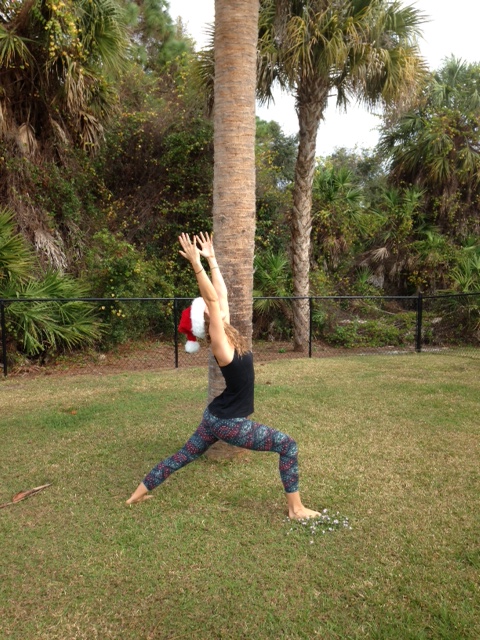
Crescent Lunge with Backbend

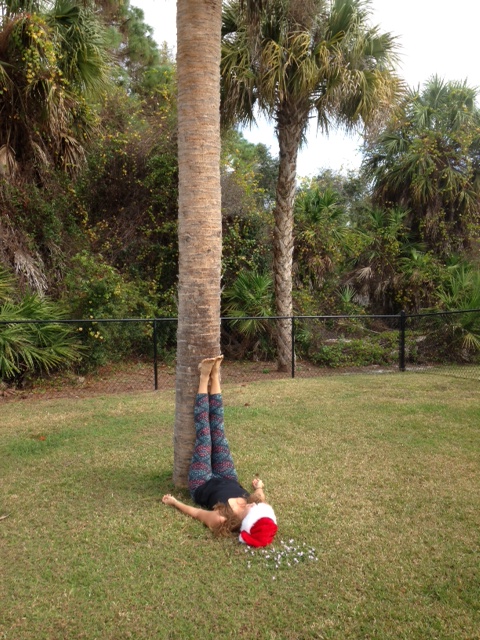
Legs-Up-the-Wall Pose/Viparita Karani
*Detoxifying, boosts your immune system, stimulates your circulatory system, strengthens your diaphragm/respiratory system (An inversion a day keeps the doctor away!
Hold anywhere from 30 sec. to 5 or 10 minutes)

image-2

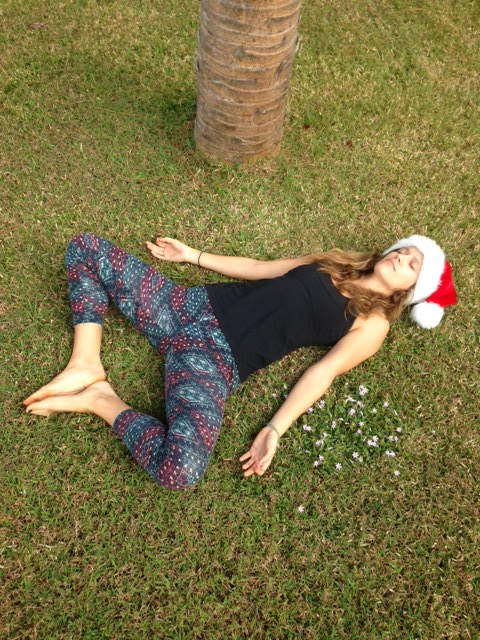
Reclining Bound Angle Pose/Supta Baddha Konasana
*Hip opener, releases tension, stimulates respiratory system through thoracic breathing – expand rib cage with inhale, spine neutralizer (hold 2 min. or up to 5-10 min.)

image-3

Easy Pose/Sukhasana
*Meditative posture, straight spine and shoulders back, abdomen engaged to support your torso, neutral position. (If you like: Engage in slow, deep breathing with an elongated exhalation (2x inhale) and introduce your mantra here. Hold 5 to 10 min. or as long as you’d like. This is an easy introduction to a regular meditation practice.)

image-4

**BONUS: (My favorite, if you’re up for a challenge!)**

Lord of the Dance Pose/Natarajasana
*Balancing posture, hip opener, core/strength building (Hold for 30 sec. to 1 min. on each side. Be sure to find a drishti, or stationary visual point about 4 feet in front of you to lock your gaze and help maintain balance.)

image-6

Xx Cheers! xX

Reality Check: When Life Gives You Lemons (+ Recipe)

As 2014 comes to a close I find myself reflecting on the past three months and my first semester in Yoga Studies, and a resounding lesson – or key takeaway persists:

Reality Check #1 (since I lost count long ago, we have to start somewhere):

When life gives you lemons, you still have to squeeze your own [damn] lemonade.

Ultimately, life is what you make it. You can be lucky, work hard, and be at the right place at the right time – but where you go from there is entirely up to you. It’s how you interact with others, what imprint you leave on the room (and the world) after you leave it; who you influence, the choices you make and how you are. That, is also your karma. It’s your footprint, and your fingerprint. It’s uniquely you and a lasting impression. How deeply do you love? How fully do you live? These are choices, as much as they are inherent to you.

Sometimes you have to really bust it to get through, and other times it’s easier. For better or for worse, in speaking for myself, I’ve made the decisions I’ve made to land me in this very moment, right where I belong. (Really, what benefit is there in believing otherwise?) There’s something to learn from difficult times and a way to grow in painful times, that will just make you stronger down the road. And in turn, it’s important to remember there’s always something to give in times of success and prosperity, time to lend to old friends or family when things finally seem to slow down. We all have all of these moments – the good and the bad. Embrace them for what they are, but don’t let them rule you. And know it’s how you react that makes you who you are, and how the world knows you. Less so what you wear, where you work (“what you do”) or what you look like. And much more, how you love.

Our choices – mine and yours – are responsible for what happens next. They’re an expression of ourselves, our individuality, that’s more bold than wearing a crop top and hot-pants. Because, when you make a new friend or find a new relationship, it’s not about what they’re thinking as much as what they’re feeling. That rush you get from a great conversation with a stranger, because they listened, and stopped to focus their attention on you. That’s an impression, that’s an air, a compassion, a reputation. That’s who are you, and that’s your karma.

So, [in other words] my takeaway this year is: When you find yourself in the right place at the right time, you have a responsibility to act. Don’t wait for the world to do it for you or for life to get a bit easier first…You are brilliant and capable, or you wouldn’t have found yourself where you’re standing. (With gratitude!) When you find yourself in a position that just feels right – which may sometimes, tragically contradict what “makes sense” – you can rest assured that if you move forward, you won’t regret. Take every opportunity like it’s yours, like it’s the only one, and like it was meant for you; because, it was – because our choices dictate who we are.

I’m making the commitment to take on 2015 like it’s all mine for the taking. Always: Go get ‘em – in whatever you decide to do. And remember, it’s already in you, you just have to let it shine…

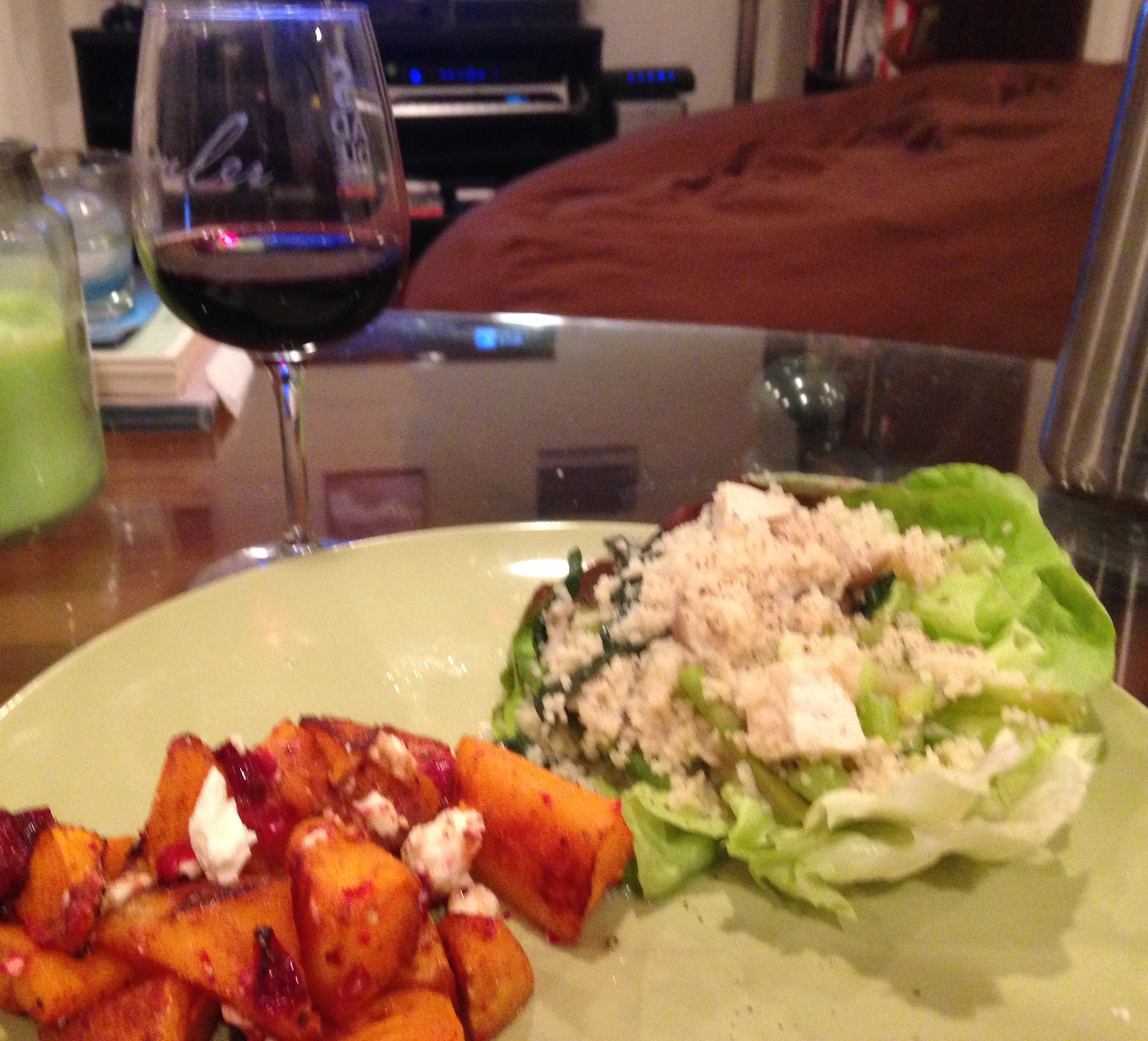
A little autumn inspiration to fuel your fire (both your internal fire & your agni, or the fire in your belly) 😉 I had all the ingredients in my cabinets and got the rest (along with this recipe) from my CSA, Farm Fresh to You. Eat with the seasons! (Your body will thank you…) And don’t fear, all this goodness is also readily available at your local supermarket.

butternut squash

Honey-Roasted Butternut Squash (with Cranberries & Feta)

* I served with whole wheat couscous, extra veggies and tofu + garlic, butter (we use, Melt), sea salt, pepper & red wine!

Ingredients:

-1 butternut squash, peeled and chopped (or acorn, spaghetti squash, or your seasonal favorite!)

– Olive oil (or your oil of choice, coconut oil in this combo is delicious)

– Salt, pepper, garlic (crushed or minced – so cheap at Trader Joe’s! – or garlic powder works just fine)

– 2 cups of fresh cranberries

– Honey, to taste (2-3 tablespoons average)

– ¼ cup crumbled feta cheese

– Ground cinnamon, to taste

– Fresh parsley (optional)

  1. Pre-heat oven to 400 F. Drizzle baking sheet (or glass baking pan) lightly with olive oil.
  1. Cube squash or cut how you’d prefer in approx. 1-2 inch pieces. Lightly drizzle olive oil and sprinkle a light layer of salt, pepper, and garlic over squash, to taste.
  1. Roast at 400 F for 25 minutes on center rack. Then, add cranberries to roasting pan.
  1. Return dish to oven for 10-15 minutes, or until the cranberries begin to soften and burst open.
  1. Remove from oven, add a sprinkle of cinnamon (~ ¼ teaspoon) along with feta and honey, to taste. Garnish with parsley (for “ooh lala” factor).
  1. Enjoy with others or on your own! I enjoyed my leftovers 😉


Bon Appetit and well wishes for an abundance of warmth and light [in your life and your heart] this season ❤
Amy

Give in to Comfort (+ Recipe)

O’ tidings of comfort and joy! Comfort and joy… I’ve never stopped to consider these lyrics before, but giving a nod to a holiday classic, I’d have to say that word choice here is key. Tidings of comfort can allude to many things, such as that of family, of warmth – both physical (hanging fireside with hot cocoa) and emotional (open hearts and widespread generosity), of abundant food and ideally of relaxation. To feed yourself [and others], to love yourself [and others], to celebrate love, life and gratitude for all that you have. For an old church hymn, they’ve covered a lot of ground. (Good work, ye merry gentlemen!)

Of course, like any good celebration, the holidays come with their fair share of temptations and frustrations (and did I mention, expectations?). So, if you’re like me, the pre-Thanksgiving time is marked by a bit of anxiety. Excitement for a season of family and friends [with their respective social outings and get togethers], and a looming hope that you don’t get too carried away – with your holiday shopping, long-nights out and working overtime, heated dinner-table discussions with relatives, or double chocolate fudge [martini] indulgence. How do we walk the fine line between indulging in the comfort of the season and not over-indulging? It’s a difficult balance made much simpler by approaching the season with mindfulness – remembering that indulgence foremost means caring for yourself.

Here are a few things to keep in mind as you look forward to the comfort and joy of the holiday season! (And to relieve any lingering anxiety over all the goodness yet to come…)

Bubble baths. To me, bubble baths are the ultimate form of indulgence. For you, it may be something else – perhaps reading a book or having a glass of wine by the fireplace (actually, I change my answer…) Take time during your time off this holiday season to indulge the way you want to. Too often in the past, I’ve felt the holidays have come and gone without allowing myself any time to relax. But I’m giving you permission – you can even put it in your calendar! – to make time for yourself, as often as you can, to indulge this holiday. (I’m talking bubble baths, candles, home facials and red wine…) You’ll be just as grateful come January, when you return to your routine feeling rested and rejuvenated 😉

Taste everything. As I’ve said before: Food is love! And you deserve only the best. But, of course, the best includes Gramma’s seasonal batch of double chocolate fudge and late-night pizza with high school friends. Don’t deny yourself a single thing this holiday, but do allow yourself [in most cases] just a taste. (Don’t panic – for me, this translates as one piece of fudge or 1-2 slices of pizza. Make it as realistic as it is delicious.) Ultimately, you have control over how much of what ends up on your plate. Start off with a taste of everything you want – one or two spoonfuls (use your judgment) – and then pick the thing (or two) you liked the most and go back for more! For dessert, go for that big ol’ slice of pie – but be kind to your body, pick just one (big) or two (small) things. And if you’re feeling bummed about missing out on a second piece of pie or that other tasty treat in the back, take one home for tomorrow or split with a friend. (I sometimes have to remind myself, there will be many more chocolate chip cookies in my future. No need to eat them all now!) Allow yourself to indulge in all the comfort of the season, while remembering to care for yourself foremost. This is key to avoiding next-day belly aches and painful hangovers at the holidays – and throughout the year, tried and true!

Stay Well. A lot goes on during the holiday season, you could even say it’s gained a reputation for stirring the pot. High emotions – of grief and loss, of being over-worked and exhausted, of frustration and anger, of fears and expectations for the coming year – often associated with the season are compounded by high stress, a natural derivative of the holidays. Acknowledge this, and even excuse yourself in advance. If and when things do come up, let them and then let them go. Take care of yourself and care for others. Greet stress  with as much compassion as you can muster. Remember that over-indulging in one thing, won’t relieve the burden of another. Give yourself the courtesy of acknowledging what you’re feeling as it comes up, and then take a step back and check out the big picture (“I’m really exhausted from being so busy.” Or, “I just miss my family, a lot.”) Then, from that place, decide how you’ll react. Take a nap, cook dinner for a friend, call a loved one, or hit a yoga class; indulge in a way that’s constructive and that won’t further aggravate yourself or others. Give yourself some love, and stay well.

Coincidently, these three are also a recipe for joy. I didn’t fully understand the meaning of joy, nor did I take much interest, until I challenged myself to follow these steps to the best of my ability, everyday (about a year ago this holiday). Since then, my constant belly aches have gone away, stress has become more manageable, I get sick less, I feel better, and I eat everything I want (but usually, just a taste). Caring for yourself is foremost. Once you can sustain a healthy balance of giving unto others (i.e. work, friends & family) and giving in to comfort – there is only joy. (Although, I’ll be the first to say this is an ongoing process, it’s certainly a commitment worth making to yourself, and for others.)

Live well and be well! ‘Tis the season of comfort & joy! I’m looking forward to spending quality time with friends and family in the coming weeks and wish you all of the comfort and joy that this season brings!

————————————————————————————————————

As the weather gets cooler – and the urge to curl up on the couch gets stronger – I thought I’d share a recipe to put aside for your next night at home. Just keep a box of Annie’s handy and add other goodies as you see fit! Bon appetit…

This is a favorite variation to spruce up my favorite comfort food. I encourage you to add, subtract and modify to make it as delectable for you.

Veggie Bomb [Buffalo] Mac n’ Cheese
(Makes enough for two, or one with leftovers!)

Ingredients:

  • 1 Box Annie’s Mac n’ Cheese (I love the “white shells,” but you can use any brand or variety you like. I’d recommend sticking with organic or whole wheat, if possible.)
  • Buffalo Sauce (Franks or any variety. Hot sauce works, too!)
  • Almond milk (or soy or organic dairy. I wouldn’t recommend using coconut milk here, as it’s consistency isn’t ideal for the “n’ cheese” to follow)
  • Kale and/or Spinach (or any dark leafy green in your fridge)
  • Celery, 4 stalks chopped
  • Consider adding: chopped tomato, red, green or hot peppers, onion or broccoli, as desired

Protein, optional:

  • Tofu (firm, cut into cubes), boneless chicken (thin tenders are easiest) or chicken sausage

Directions:

  • Cook pasta according to box. Chop celery and put aside.
  • In a frying pan, layer the bottom with buffalo sauce (no oil necessary, but optional) and allow protein to cook in sauce. Tofu can be heated 5-10 minutes; chicken may take longer or can be pre-cooked. Add celery to frying pan and let simmer.
  • Once pasta is cooked to taste and before draining water, turn off stove and stir in leafy greens as desired. (The hot water in the pot will cook up the greens without overcooking the pasta. If you forget and drain accidentally, that’s all right – just add greens to frying pan with celery.)
  • Drain water, add milk n’ cheese, stir and let sit a minute or two for sauce to thicken.
  • Combine all ingredients and enjoy!

Also – if you’re in need of any ideas for your Thanksgiving potluck, I’ll be cooking up some California Oatmeal Cookies with cranberries and dark chocolate chips 😉

Stay Well ❤

Amy

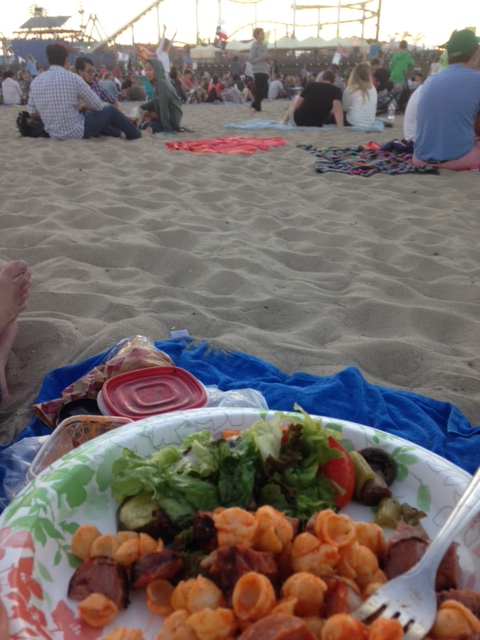
Personal Photo: Santa Monica Pier summer concert series, circa 2013

Getting Intimate

Over the weekend, I was surprised to find myself completely immersed in a five-hour training on yoga, sex and intimacy. My confusion was justified – The title of the workshop was “Yoga is Peace.” Where did I go wrong (or, wonderfully right)?

Mark Whitwell is a famous yoga teacher (I use this phrase reluctantly, but if anyone deserves the title, he does) and writer who studied for twenty years under Sri T. Krishnamacharya, the guru (or teacher) graciously credited with introducing yoga to Europe, Asia, and the Americas within the past century. (Should your interest in yoga meaning and philosophy grow, his work is a great place to start…)

Mark began by introducing himself to the class and proclaiming emphatically:

“YOGA IS… [wait for it]…DIRECT intimacy…with reality.”

He followed: “Forget any other definition you’ve ever heard. This is Truth.”

Mark’s “no bullshit” approach to teaching struck a chord. Perhaps too tight of chord, as he later added in the words of his teacher, Sri Krishnamacharya: “Yoga is not information gathering.” (Tell this to the girl working 24/7 in yoga studies.) What he means by this, of course, is simply: It’s already in you. So, focus your attention there.

Regarding sex, intimacy and yoga, we can go back to Mark’s definition of yoga generally as “direct intimacy with reality.” But, what does this really mean? He elaborated throughout his lecture that, from this view, our purpose on this planet is to have intimacy with life; that means with yourself, your partner, your community, and more abstractly, with your reality. In other words: Are you engaged, are you open? Are you a good friend, a loving partner, a “yes” person? Do you serve others in your community, do you love the work that you do? We all prioritize our own reality differently, and where and when we choose to get intimate. But, as Mark suggests, shouldn’t it be that when the day is done we can stand back and see ourselves reflected back to us (ideally with love and admiration) in all aspects of our life? If we desire to hold a purpose, as individuals and humans, shouldn’t it be to live life this way? (In this light?)

Yoga is direct intimacy with reality, with life. In this way, we can practice yoga everyday, in every aspect of our lives, by allowing ourselves to get intimate in our interactions with others and with ourselves.

As for sex: Mark shared his own observation that, as the churches continue to empty throughout America and Europe (Germany, in particular), the explicitness and vulgarity of sex in the media and social discourse continues to worsen. He digressed: “Everybody’s talking about it, and nobody’s having it.”

In my own classes, reluctant attention has recently focused on the realities of the over-sexualization of youth, and women and girls generally, in society. How prevalent are images of young girls (teens & twenties) in their underwear – or without – throughout the media? (Are you as tired of the viral Kim Kardashian as I am?) But giving this issue our sincere attention requires an uncomfortable shift of reality, and so many – including myself – do their best to stay quiet and turn the other way. There’s no need to revisit the profound implications that over-sexualization have on women and girls throughout the country, and the world. Eating disorders, body dysmorphia, body image obsession, insecurities, anxiety, inadequacies, sex trafficking and even hate crimes targeted at nonconforming homosexual individuals – all catalyzed by an extreme prevalence of “sex” in society, distorting the reality that sex [and sexuality] is intimacy – not an ego trip. Having the capacity to love and be intimate with another person is a gift, and an expression of equal exchange. It’s personal, it’s impactful, and it’s the basis of humanity. It’s easy, with the Victoria’s Secret fashion show fast approaching, to forget that this is reality. 

Mark’s parallel to the international vacancy of churches is meant to emphasize the necessity of individual spiritual life for the proliferation of humanity. He even goes so far as to say that the world depends on it. I take spirituality in my own heart to mean the active cultivation of a greater consciousness, founded in love and compassion towards oneself, one another, and our shared global community (the Earth and humanity). My church is my yoga mat. But no matter your definition or your vehicle, Mark attests that exploring your own sense of self and your own true nature is to experience intimacy, and promote creativity and creation. And, to experience direct intimacy with reality [in this way] is yoga – with, or without asana. (Although he and I highly encourage a daily home practice as a guaranteed vehicle toward exactly that. If you’re looking to create a home practice but aren’t sure where to start, contact me for help creating your own personal practice.)

In the midst of a non-stop graduate school schedule, the holiday season, and occasionally being all too aware of worldwide struggle and despair (sometimes all-to-close to home), I’ve found it helpful to go back to the notion that our purpose is intimacy. We can forget the rest. Because, if you can be intimate with life by being authentic, kind and present in every moment of your day, you’re contributing to the world in the best possible way. And, inevitably the goodness of the world will come back to you, more easily and with greater pleasure than you ever imagined. I guess, you could say in this way: Yoga is Peace.

Exploring your own comfortable definition of spirituality and creating a routine to express yourself through this light (be it yoga, attending church, simply sitting in quiet or your own personal practice) is the key to experiencing direct intimacy with life. And while it’s true – you get what you give – ultimately, getting intimate is what really makes life worth living.

Sending love and well wishes to your corner now & always,

Amy

Personal Photo: Playa Vista, CA

Hey, Good Lookin’

Early on in my teenage years, I received some valuable advice. While hanging at a (guy) friend’s house, he mentioned that his older sister was obsessed with losing weight. He relayed: “My mom says it doesn’t matter what the scale says, it matters how you feel.” As an impressionable 16-year-old, I could only assume his mother’s words were true. Regardless of why this mantra has stuck with me, I am ever grateful to have had it as I entered the age [or rather, decade] of body image and weight-obsession, myself.

Easier said than done – and for better or worse – I’ve always tried to let how I feel lead me. In the realm of weight loss, it’s interesting to note that we all have days when we feel gorgeous and sexy in our favorite size 6 jeans, and others when we loathe ourselves for wearing the same pair. I’d be willing to bet that on those days when you don’t feel good enough, it’s about the number – on the scale, at the store, or in comparison to others – or a reflection of how you’re feeling in other aspects of your life – you flunked a quiz, got in a fight with your boyfriend, or got blown off by your best friend. One negative thought, or instance, breeds many. (See Discovering Your Genius(!)) And it’s easiest to take all this negativity out on ourselves. If only I were thinner, more toned, had longer hair, were a smaller size. Then maybe I’d date that guy, go to that party, or nail that interview. But on those days when you’re feeling good, when all things are going your way, and you rock that size 6 like the hottest bitch in the club…nothing can touch you. And you don’t need a size 2, or anyone else to validate that you can do and be everything you want. What does this tell us? Another mantra I like to revisit in my own journey of up’s and down’s certainly applies here: It’s already in you. When you find yourself looking outside to feel better about yourself – to other people or to the scale – remember, that high you’ve felt before is always in you and nowhere else. (Although, speaking from experience, you may go broke and crazy searching…) It’s just up to us, when the low’s come around, to resist, remind, and rekindle the positivity within ourselves. Nothing else will do. Because, it’s all already in you.

So, with this in mind, I don’t like to spend much time dwelling on weight loss. If you’re happy, at any size, that’s all that matters. I also believe that the journey of weight loss is very personal. No one can do it for you. It can’t be bottled, or put in a pill. It has to be yours and ideally, to be successful, it should be full of activities you enjoy and foods you love. (Pick your poison – What new activity will you fall in love with? Yoga, hiking, kick-boxing, running, zumba, biking – there’s no wrong way, just your way.) As for eating, I believe maintaining a healthy weight without the drama (i.e. constant up’s and down’s of dieting) requires opening your heart and head to a lifestyle change, and learning about food. We’re bombarded with conflicting messages from the media, advertisements, documentaries, and Michelle Obama, advising us on the best approach to a healthy diet. But, I’ve found, when we simply go back to basics, eating well is easy – and intuitive. (Again, it’s already in you!)

First, I suggest getting in the habit of reading the ingredients of the foods you eat. I guarantee we spend more time researching our next big purchase, which movie to see on Saturday, or something about your Fantasy Football team (…trying to be gender neutral here, but that’s all I got), than thinking about the food we put into our bodies. The food we eat is directly responsible for fueling us throughout the day and protecting us from illness, now and as we age. Food also has the power to dictate our moods, energy levels, and even how much we break out, on a daily basis. (Pimples be gone!) You don’t need to put anything back on the shelf – not yet, anyway – but just read and acquaint yourself with what you’re putting in your body. It only takes a second. As you go, you may find that the ingredients listed in certain products, by certain brands, or at certain stores, please you the most. And remember, food is love – you deserve only the best (or the more horrid homage: your body is not a garbage can), and the better you eat, the ones you love will soon follow. [Side note: I have a huge crush on Trader Joe’s, but even there – read the labels! You’ll be surprised what you’ll find.]

My other big rule for healthy living (aka feeling good!) is: learn to cook. Ahh, I can hear the groans from cyber space, but wait just a second before I’m dismissed. I didn’t grow up loving to cook, and it wasn’t a big part of my up-bringing. But when I started living on my own, and wanted to control my weight – and reduce the anxiety I felt in finding something “healthy” among the greasy pubs and food trucks of Boston (however, delicious on occasion!) – I taught myself to cook. Here’s the thing, we’re all busy. I actually, really do believe that you have no time. I feel you, completely. But, I don’t believe you would say “Under no circumstances, will I ever cook for myself.” So I suggest, and challenge you, to create your own conditions. Under what circumstances, would you like to cook. (“Like” is important here – if you don’t enjoy the process, or the results, you won’t keep doing it. It has to be fun, and delicious!) Maybe it’s easiest for you to pack a lunch and snacks for work the night before, or the morning of. Maybe you’d prefer to cook yourself a big meal every couple days and keep the leftovers for lunches. (You can always get creative and jazz them up each time. For example, grilled chicken breast = dinner yesterday, buffalo chicken salad today, and Asian rice bowl tomorrow!) Find things you like to eat that are easy “go-to’s” for when you’re tired or feeling stuck. Under what circumstances would you brown bag it tomorrow? (Maybe buying yourself a rad new lunch bag would get you inspired.) As a loyal BYOL-er for many years, I’ll tell you it’s cooler than you’d think. Impressing people with leftovers has never been easier, in the age of $5 all you eat buffets. But the point is – Food is love. And once you start learning about the food you eat and cooking (some of) your own meals, you’ll discover you’re feeling better – you have less anxiety over what to eat and what you’re eating, more energy, fewer pimples, and more confidence because – Damn, you cooked that yourself?!

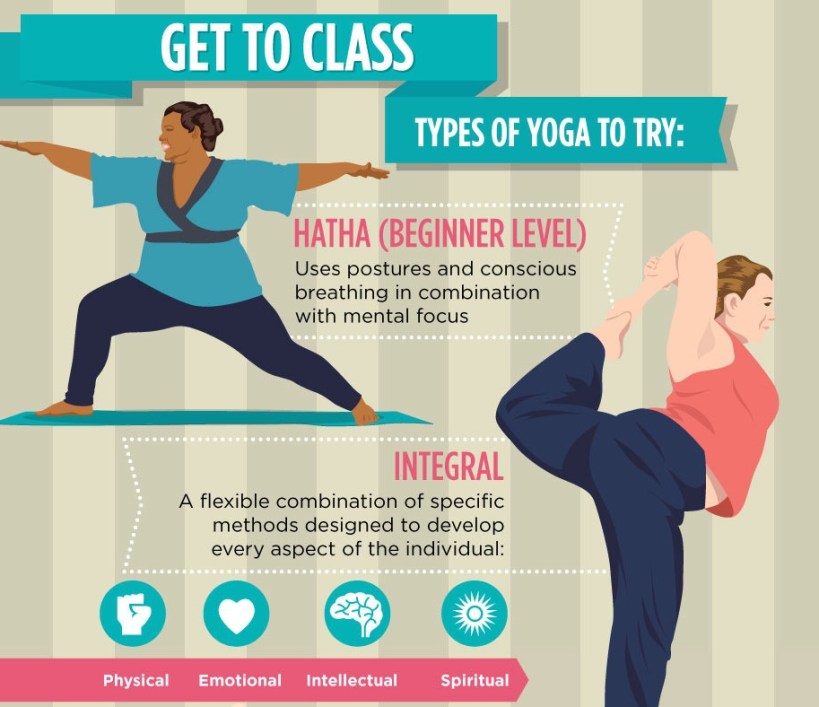
I recently received the following info-graphic for “Plus-Size Yoga” and wanted to share it with all of you. No matter your pant size – now or down the road – yoga is good for you. It feeds your physical body and psychological being in ways that allow you to feel better – crave healthier foods, have more energy, lose weight and live longer. This graphic does a great job at explaining some of the scientifically proven, medical benefits of a regular yoga practice, demonstrating specific postures which have real benefits for everyone, at all sizes. (Photo Credit and a BIG “Thanks” to Aldo Baker and Alight for spreading the word!)

I’ll check back in soon with my take on “juice cleansing” as a self-proclaimed once-a-day juicer and former juice bar employee (+ my own recipe for at-home juicing!). There’s no better place to take on the craze than out here in L.A. – I look forward to sharing what I’ve found!

Rock on,
Amy

plus-size-yoga


Hey, Good Lookin'

Early on in my teenage years, I received some valuable advice. While hanging at a (guy) friend’s house, he mentioned that his older sister was obsessed with losing weight. He relayed: “My mom says it doesn’t matter what the scale says, it matters how you feel.” As an impressionable 16-year-old, I could only assume his mother’s words were true. Regardless of why this mantra has stuck with me, I am ever grateful to have had it as I entered the age [or rather, decade] of body image and weight-obsession, myself.

Easier said than done – and for better or worse – I’ve always tried to let how I feel lead me. In the realm of weight loss, it’s interesting to note that we all have days when we feel gorgeous and sexy in our favorite size 6 jeans, and others when we loathe ourselves for wearing the same pair. I’d be willing to bet that on those days when you don’t feel good enough, it’s about the number – on the scale, at the store, or in comparison to others – or a reflection of how you’re feeling in other aspects of your life – you flunked a quiz, got in a fight with your boyfriend, or got blown off by your best friend. One negative thought, or instance, breeds many. (See Discovering Your Genius(!)) And it’s easiest to take all this negativity out on ourselves. If only I were thinner, more toned, had longer hair, were a smaller size. Then maybe I’d date that guy, go to that party, or nail that interview. But on those days when you’re feeling good, when all things are going your way, and you rock that size 6 like the hottest bitch in the club…nothing can touch you. And you don’t need a size 2, or anyone else to validate that you can do and be everything you want. What does this tell us? Another mantra I like to revisit in my own journey of up’s and down’s certainly applies here: It’s already in you. When you find yourself looking outside to feel better about yourself – to other people or to the scale – remember, that high you’ve felt before is always in you and nowhere else. (Although, speaking from experience, you may go broke and crazy searching…) It’s just up to us, when the low’s come around, to resist, remind, and rekindle the positivity within ourselves. Nothing else will do. Because, it’s all already in you.

So, with this in mind, I don’t like to spend much time dwelling on weight loss. If you’re happy, at any size, that’s all that matters. I also believe that the journey of weight loss is very personal. No one can do it for you. It can’t be bottled, or put in a pill. It has to be yours and ideally, to be successful, it should be full of activities you enjoy and foods you love. (Pick your poison – What new activity will you fall in love with? Yoga, hiking, kick-boxing, running, zumba, biking – there’s no wrong way, just your way.) As for eating, I believe maintaining a healthy weight without the drama (i.e. constant up’s and down’s of dieting) requires opening your heart and head to a lifestyle change, and learning about food. We’re bombarded with conflicting messages from the media, advertisements, documentaries, and Michelle Obama, advising us on the best approach to a healthy diet. But, I’ve found, when we simply go back to basics, eating well is easy – and intuitive. (Again, it’s already in you!)

First, I suggest getting in the habit of reading the ingredients of the foods you eat. I guarantee we spend more time researching our next big purchase, which movie to see on Saturday, or something about your Fantasy Football team (…trying to be gender neutral here, but that’s all I got), than thinking about the food we put into our bodies. The food we eat is directly responsible for fueling us throughout the day and protecting us from illness, now and as we age. Food also has the power to dictate our moods, energy levels, and even how much we break out, on a daily basis. (Pimples be gone!) You don’t need to put anything back on the shelf – not yet, anyway – but just read and acquaint yourself with what you’re putting in your body. It only takes a second. As you go, you may find that the ingredients listed in certain products, by certain brands, or at certain stores, please you the most. And remember, food is love – you deserve only the best (or the more horrid homage: your body is not a garbage can), and the better you eat, the ones you love will soon follow. [Side note: I have a huge crush on Trader Joe’s, but even there – read the labels! You’ll be surprised what you’ll find.]

My other big rule for healthy living (aka feeling good!) is: learn to cook. Ahh, I can hear the groans from cyber space, but wait just a second before I’m dismissed. I didn’t grow up loving to cook, and it wasn’t a big part of my up-bringing. But when I started living on my own, and wanted to control my weight – and reduce the anxiety I felt in finding something “healthy” among the greasy pubs and food trucks of Boston (however, delicious on occasion!) – I taught myself to cook. Here’s the thing, we’re all busy. I actually, really do believe that you have no time. I feel you, completely. But, I don’t believe you would say “Under no circumstances, will I ever cook for myself.” So I suggest, and challenge you, to create your own conditions. Under what circumstances, would you like to cook. (“Like” is important here – if you don’t enjoy the process, or the results, you won’t keep doing it. It has to be fun, and delicious!) Maybe it’s easiest for you to pack a lunch and snacks for work the night before, or the morning of. Maybe you’d prefer to cook yourself a big meal every couple days and keep the leftovers for lunches. (You can always get creative and jazz them up each time. For example, grilled chicken breast = dinner yesterday, buffalo chicken salad today, and Asian rice bowl tomorrow!) Find things you like to eat that are easy “go-to’s” for when you’re tired or feeling stuck. Under what circumstances would you brown bag it tomorrow? (Maybe buying yourself a rad new lunch bag would get you inspired.) As a loyal BYOL-er for many years, I’ll tell you it’s cooler than you’d think. Impressing people with leftovers has never been easier, in the age of $5 all you eat buffets. But the point is – Food is love. And once you start learning about the food you eat and cooking (some of) your own meals, you’ll discover you’re feeling better – you have less anxiety over what to eat and what you’re eating, more energy, fewer pimples, and more confidence because – Damn, you cooked that yourself?!

I recently received the following info-graphic for “Plus-Size Yoga” and wanted to share it with all of you. No matter your pant size – now or down the road – yoga is good for you. It feeds your physical body and psychological being in ways that allow you to feel better – crave healthier foods, have more energy, lose weight and live longer. This graphic does a great job at explaining some of the scientifically proven, medical benefits of a regular yoga practice, demonstrating specific postures which have real benefits for everyone, at all sizes. (Photo Credit and a BIG “Thanks” to Aldo Baker and Alight for spreading the word!)

I’ll check back in soon with my take on “juice cleansing” as a self-proclaimed once-a-day juicer and former juice bar employee (+ my own recipe for at-home juicing!). There’s no better place to take on the craze than out here in L.A. – I look forward to sharing what I’ve found!

Rock on,
Amy

plus-size-yoga


Discovering Your Genius(!)

“To believe your own thought, to believe that what is true for you in your private heart is true for all men – that is genius. Speak your latent [inner] conviction, and it shall be the universal sense [agreed upon by all].” 

I have the pleasure – and honor – of crafting a comparison for my Foundations of Yoga Studies midterm essay, between Ralph Waldo Emerson’s essay Self Reliance (introduction referenced above) and the Katha Upanishad,* one of the “principal thirteen” Upanishads which include many essays and poems written by ancient Vedic priests, and is one of the initial documented forms of yoga dating back to ~ 1st century B.C.E. I chose this topic because, remembering an experience in middle school when I was first exposed to Emerson’s Self Reliance (or more accurately, an “Ah-ha” moment), I recall telling people afterwards that it was my “favorite book” (embarrassing) – But, to tell the truth, I don’t remember a thing about it. I’ve heard of comparisons between Vedic [ancient yogic] philosophy and Transcendentalism – i.e. 19th century C.E. Thoreau (Walden) and Emerson (Nature, Self-Reliance) – so why not take the opportunity to revisit an old favorite?

A favorite verse from Self-Reliance, and one that I think aptly captures the key similarities between Transcendental and Yogic philosophy, is:

“To believe your own thought, to believe that what is true for you in your private heart is true for all men – that is genius. Speak your latent conviction, and it shall be the universal sense.”

Although I have an obvious bias – really, more of a crush on – well-crafted rhetorical persuasion as a student of politics, something about these words resonates with me on a deep and profound level. And, as Emerson states above, he would bet that this resonance has the potential to strike everyone the same way, as “is true for all men,” we’re innately and equally capable of harnessing our inner “genius” (or in yoga philosophy: your personal truth or [big-S] Self). “Speak your latent conviction, and it shall be the universal sense.” I read this as a command – and think it should end with the proper exclamation(!). With Emerson toting a blue-ribboned ponytail and GW-type swag, balking back on his horse, I imagine him saying, perhaps with a megaphone: “Go forth! And be, unapologetically, you!” Trust your gut! He says. It sounds so simple, but its difficulty is revealed when we take a moment to sincerely consider how we are (what we think, do, say) on a daily basis. Going through the motions of work, school, homework, meetings and travel – it’s easy to get swept away with the current and fall into a routine. But, when you pay closer attention to your interactions and thoughts throughout the day, how many times do you say something or agree with something simply out of habit or ease? (When in truth, it may have been in opposition with your true “gut.” That’s alright, we all do it!) It’s easier, even habitual at times, to “just get through” the day. But if nothing else, it’s interesting to consider how we might be inadvertently stifling our own voice, and succumbing to negativity in this process. Emerson’s advice: Trust Thyself.  Find your genius in the genuine. Or the modern adapted version: Go forth and be fabulous!

Our thoughts are powerful. Last week, I provided some insights into the “Yoga & Neuroscience” and want to share another related concept. For every negative thought we hear or think, it takes five positive thoughts to get back to normal/neutral from the resulting mood imbalance – just like momentary depression. This is scientifically proven as an evolutionary survival reflex, and is referred to as our innate “negativity bias.” (More on negativity bias here.) I mentioned last week, that thoughts – according to neuroscientists – are actually a group of connected neurons in the brain, that together form a single thought or idea. Repetition of the same idea or thought over-and-over strengthens this connection, so the more often we think (or say) something, the more likely we are to think it again. Considering this, and considering how much – scientifically speaking – a single negative thought brings us down, it’s apparent that its advantageous for our well-being to pay attention to what’s going on in our noggin. When we start to recognize our own internal “negativity bias,” we can begin to change our thoughts from a predominantly negative to a positive spin, or worldview. And, the good news is, just as negative thoughts strengthen and recur with repetition, so do positive thoughts. (All thoughts follow this rule – What have you been thinking about a lot lately?)

“To believe your own thought, to believe that what is true for you in your private heart is true for all men – that is genius. Speak your latent conviction, and it shall be the universal sense.” 

Trust yourself (and treat yourself)! Be open to hearing yourself out and making yourself heard. Stay positive, especially when it’s difficult, because you’re creating a path to follow in the future. And seeking what’s easy is understandable, but living your truth is genius! (Just sayin’…) This is also, living in yoga.

Emerson has inspired my week, having set the intention to live by his motto: “Trust thyself.” In recalling the negative thoughts which have occupied my mind lately, it’s clear that my own doubt and fear (the antithesis of trust) are most at fault. Once we get passed this depressing duo, or overcome our negativity bias, how many more positive thoughts will we think? How happy can we be? I intend to find out. What’s your intention this week?

With love,
Amy

———–

*Katha Upanishad (pronounced in Sanskrit: “Kat-a,” like Immanuel Kant without the “n”)

In case you want more on negativity bias:

– Dr. Rick Hanson discusses the neuropsychological basis for “Confronting the Negativity Bias” as an evolutionary survival tactic, and how to overcome it.

– Check out this NY Times article which discusses the importance and benefits of overcoming your “negativity bias,” and its impact at work and in your everyday life.

^ Excerpt: “The more you’re able to move your attention to what makes you feel good, the more capacity you’ll have to manage whatever was making you feel bad in the first place. Emotions are contagious, for better or worse. It’s your choice.”

Photo Credit: Personal photo of a surf(bill)board outside a cafe in the Nicoya Peninsula, Costa Rica.

The Missing Link: Yoga & Neuroscience

This weekend, I found the “missing link.” As part of LMU’s Masters in Yoga Studies curriculum, there is a pre/co-requisite to enroll in one of several certificate programs. I was excited to enroll in the pilot year of “Yoga, Mindfulness and Social Change,” which features renowned speakers from all over the country with varying expertise within the field. This weekend’s topic was “Yoga & Neuroscience,” and although I’ve always been intrigued (perhaps hereditarily) by psychology and sociology, I was taken aback and truly blown away by the evidence modern neuroscience provides of the true benefits of yoga.

As you might remember, my hope and mission in this program is to discern the socioeconomic benefits of yoga, within a global context. This interest came about through years of courses and hands-on experience in sociology, communications, media relations, cultural studies and international affairs, through which I developed a deep-seated interest in what makes people think the way they do – both as individuals, and as a collective society. Academically speaking, my pursuit is an exploration of individual ideological formation (aka consciousness), as well as of institutionalized methodologies of ideological pervasion. While in college, I was blessed with unique opportunities: to study the pervasion of local culture through public and mainstream media in Australia; to explore (and publish a manuscript on) gender disparity in Latin America as it relates to pervading machismo attitudes and state-controlled transmission of democratic ideals (see “About Me”); and, after college, to work for several years in politics and government affairs for non-profit and private, small and large organizations – to better understand what makes us and others, especially those in “power,” think the way they do. And, (surprisingly to me as well) this journey has led me to yoga studies. Mounting evidence supports my personal belief that yoga, over all other modalities, has the greatest potential to positively reform individual and collective ideology – thereby helping us live happily and helping communities live peacefully, everywhere. Imagine that.

This weekend, I attended two five-hour lectures on “Yoga & Neuroscience” by leading neuroscientists in consciousness formation (see “Lecture Credit” below), and soon found that scientific evidence already supports that yoga, meditation and mindfulness practices stimulate and even grow the part of the brain responsible for processing feelings of compassion, empathy, altruism, interconnectedness and happiness – otherwise known as the “neocortex.” Specifically, I learned that practices such as yoga and meditation, as well as Tai Chi and nature activities, help stimulate the brain’s neuroplasticity, or its capability to grow and reshape itself through the movement and connection of neurons. (More simply, neuroplasticity states that the brain is not a fixed form, but is in fact adaptable.) As a result, these practices in particular have been proven to expand and increase activation of the neocortex and overall brain capacity, as well as physically enlarge areas that promote feelings of empathy, compassion and altruism – collectively called our “emphatic response.”

However nice this all sounds, it may feel a bit displaced, as our society currently embodies a paradigm – or pervading ideology – which disproportionately emphasizes the “reptilian” brain, or the part of the brain responsible for primal instincts, basic survival needs, ego and competition, rather than cooperation. Many practitioners and professionals (and scientists) who have been imparted with this knowledge also believe that we [the human race] are in the midst of an evolutionary shift towards global cooperation. More candidly, they articulate a resounding belief that mankind must either learn to cooperate and live harmoniously with one another and with Nature, or fall victim to the harsh realities of disconnectivity and competition (i.e. global warming) for generations to come. As such, we notice widespread discontentment and rebellion in the form of protests, political stalemate and corruption, and civil war around the world and in the States, at levels unprecedented since the last major paradigm shift occurred in the 17th century (following the Industrial Revolution). It’s worthy to note my own belief on this issue is still evolving as I gather more information, and I encourage you also to ask the hard questions and think critically about this and all information you hear about the future of our planet. But, I do believe strongly in the agency and power of individuals to incite change in themselves, and in the world around them; be it on Capitol Hill, in the classroom, or on their yoga mat. And I hope to continue to explore the empirical evidence available now, and that yet to be discovered, which enables us to better understand how yoga, meditation and mindfulness practices benefit you and me, and (why not…) the rest of the world.

On that note, I’d like to dedicate a thought (or several) in recognition and gratitude of Mother Nature and the vast resources and opportunities she provides us: as humans, as Westerners, as yogis, as wilderness explorers, or from whatever perspective most resonates with you. It can be something as simple as a sunset, or as vast as the algorithms of consciousness and science we seek to understand. In solidarity, give thanks!

Peace – Shalom – Om Shanti,

Amy

Videos to Watch:

The Empathic Civilisation (10 minutes: 30 seconds)

How Meditation Works: For Beginners (2 minutes: 50 seconds)

Lecture Credit:

Dr. Jay Kumar (9/27/14)

Dr. Louis Cozolino (9/28/14)

Photo Credit:

Sunrise in the Outback, Alice Springs, Australia (Personal Photo, July 2009)

The Missing Link: Yoga & Neuroscience

This weekend, I found the “missing link.” As part of LMU’s Masters in Yoga Studies curriculum, there is a pre/co-requisite to enroll in one of several certificate programs. I was excited to enroll in the pilot year of “Yoga, Mindfulness and Social Change,” which features renowned speakers from all over the country with varying expertise within the field. This weekend’s topic was “Yoga & Neuroscience,” and although I’ve always been intrigued (perhaps hereditarily) by psychology and sociology, I was taken aback and truly blown away by the evidence modern neuroscience provides of the true benefits of yoga.

As you might remember, my hope and mission in this program is to discern the socioeconomic benefits of yoga, within a global context. This interest came about through years of courses and hands-on experience in sociology, communications, media relations, cultural studies and international affairs, through which I developed a deep-seated interest in what makes people think the way they do – both as individuals, and as a collective society. Academically speaking, my pursuit is an exploration of individual ideological formation (aka consciousness), as well as of institutionalized methodologies of ideological pervasion. While in college, I was blessed with unique opportunities: to study the pervasion of local culture through public and mainstream media in Australia; to explore (and publish a manuscript on) gender disparity in Latin America as it relates to pervading machismo attitudes and state-controlled transmission of democratic ideals (see “About Me”); and, after college, to work for several years in politics and government affairs for non-profit and private, small and large organizations – to better understand what makes us and others, especially those in “power,” think the way they do. And, (surprisingly to me as well) this journey has led me to yoga studies. Mounting evidence supports my personal belief that yoga, over all other modalities, has the greatest potential to positively reform individual and collective ideology – thereby helping us live happily and helping communities live peacefully, everywhere. Imagine that.

This weekend, I attended two five-hour lectures on “Yoga & Neuroscience” by leading neuroscientists in consciousness formation (see “Lecture Credit” below), and soon found that scientific evidence already supports that yoga, meditation and mindfulness practices stimulate and even grow the part of the brain responsible for processing feelings of compassion, empathy, altruism, interconnectedness and happiness – otherwise known as the “neocortex.” Specifically, I learned that practices such as yoga and meditation, as well as Tai Chi and nature activities, help stimulate the brain’s neuroplasticity, or its capability to grow and reshape itself through the movement and connection of neurons. (More simply, neuroplasticity states that the brain is not a fixed form, but is in fact adaptable.) As a result, these practices in particular have been proven to expand and increase activation of the neocortex and overall brain capacity, as well as physically enlarge areas that promote feelings of empathy, compassion and altruism – collectively called our “emphatic response.”

However nice this all sounds, it may feel a bit displaced, as our society currently embodies a paradigm – or pervading ideology – which disproportionately emphasizes the “reptilian” brain, or the part of the brain responsible for primal instincts, basic survival needs, ego and competition, rather than cooperation. Many practitioners and professionals (and scientists) who have been imparted with this knowledge also believe that we [the human race] are in the midst of an evolutionary shift towards global cooperation. More candidly, they articulate a resounding belief that mankind must either learn to cooperate and live harmoniously with one another and with Nature, or fall victim to the harsh realities of disconnectivity and competition (i.e. global warming) for generations to come. As such, we notice widespread discontentment and rebellion in the form of protests, political stalemate and corruption, and civil war around the world and in the States, at levels unprecedented since the last major paradigm shift occurred in the 17th century (following the Industrial Revolution). It’s worthy to note my own belief on this issue is still evolving as I gather more information, and I encourage you also to ask the hard questions and think critically about this and all information you hear about the future of our planet. But, I do believe strongly in the agency and power of individuals to incite change in themselves, and in the world around them; be it on Capitol Hill, in the classroom, or on their yoga mat. And I hope to continue to explore the empirical evidence available now, and that yet to be discovered, which enables us to better understand how yoga, meditation and mindfulness practices benefit you and me, and (why not…) the rest of the world.

On that note, I’d like to dedicate a thought (or several) in recognition and gratitude of Mother Nature and the vast resources and opportunities she provides us: as humans, as Westerners, as yogis, as wilderness explorers, or from whatever perspective most resonates with you. It can be something as simple as a sunset, or as vast as the algorithms of consciousness and science we seek to understand. In solidarity, give thanks!

Peace – Shalom – Om Shanti,

Amy

Videos to Watch:

The Empathic Civilisation (10 minutes: 30 seconds)

How Meditation Works: For Beginners (2 minutes: 50 seconds)

Lecture Credit:

Dr. Jay Kumar (9/27/14)

Dr. Louis Cozolino (9/28/14)

Photo Credit:

Sunrise in the Outback, Alice Springs, Australia (Personal Photo, July 2009)