Reality Check: When Life Gives You Lemons (+ Recipe)

As 2014 comes to a close I find myself reflecting on the past three months and my first semester in Yoga Studies, and a resounding lesson – or key takeaway persists:

Reality Check #1 (since I lost count long ago, we have to start somewhere):

When life gives you lemons, you still have to squeeze your own [damn] lemonade.

Ultimately, life is what you make it. You can be lucky, work hard, and be at the right place at the right time – but where you go from there is entirely up to you. It’s how you interact with others, what imprint you leave on the room (and the world) after you leave it; who you influence, the choices you make and how you are. That, is also your karma. It’s your footprint, and your fingerprint. It’s uniquely you and a lasting impression. How deeply do you love? How fully do you live? These are choices, as much as they are inherent to you.

Sometimes you have to really bust it to get through, and other times it’s easier. For better or for worse, in speaking for myself, I’ve made the decisions I’ve made to land me in this very moment, right where I belong. (Really, what benefit is there in believing otherwise?) There’s something to learn from difficult times and a way to grow in painful times, that will just make you stronger down the road. And in turn, it’s important to remember there’s always something to give in times of success and prosperity, time to lend to old friends or family when things finally seem to slow down. We all have all of these moments – the good and the bad. Embrace them for what they are, but don’t let them rule you. And know it’s how you react that makes you who you are, and how the world knows you. Less so what you wear, where you work (“what you do”) or what you look like. And much more, how you love.

Our choices – mine and yours – are responsible for what happens next. They’re an expression of ourselves, our individuality, that’s more bold than wearing a crop top and hot-pants. Because, when you make a new friend or find a new relationship, it’s not about what they’re thinking as much as what they’re feeling. That rush you get from a great conversation with a stranger, because they listened, and stopped to focus their attention on you. That’s an impression, that’s an air, a compassion, a reputation. That’s who are you, and that’s your karma.

So, [in other words] my takeaway this year is: When you find yourself in the right place at the right time, you have a responsibility to act. Don’t wait for the world to do it for you or for life to get a bit easier first…You are brilliant and capable, or you wouldn’t have found yourself where you’re standing. (With gratitude!) When you find yourself in a position that just feels right – which may sometimes, tragically contradict what “makes sense” – you can rest assured that if you move forward, you won’t regret. Take every opportunity like it’s yours, like it’s the only one, and like it was meant for you; because, it was – because our choices dictate who we are.

I’m making the commitment to take on 2015 like it’s all mine for the taking. Always: Go get ‘em – in whatever you decide to do. And remember, it’s already in you, you just have to let it shine…

A little autumn inspiration to fuel your fire (both your internal fire & your agni, or the fire in your belly) 😉 I had all the ingredients in my cabinets and got the rest (along with this recipe) from my CSA, Farm Fresh to You. Eat with the seasons! (Your body will thank you…) And don’t fear, all this goodness is also readily available at your local supermarket.
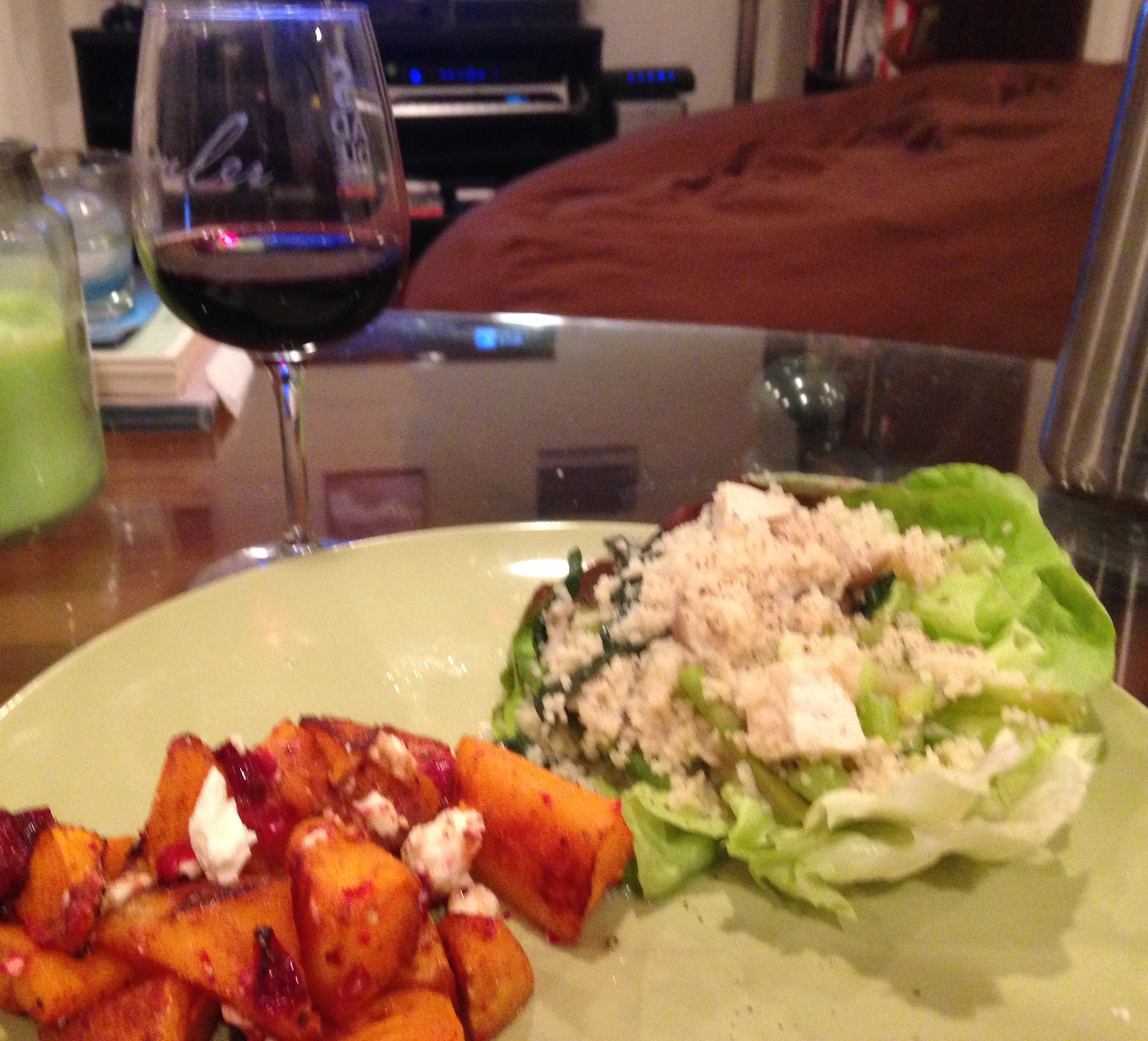
butternut squash

Honey-Roasted Butternut Squash (with Cranberries & Feta)

* I served with whole wheat couscous, extra veggies and tofu + garlic, butter (we use, Melt), sea salt, pepper & red wine!

Ingredients:

-1 butternut squash, peeled and chopped (or acorn, spaghetti squash, or your seasonal favorite!)

– Olive oil (or your oil of choice, coconut oil in this combo is delicious)

– Salt, pepper, garlic (crushed or minced – so cheap at Trader Joe’s! – or garlic powder works just fine)

– 2 cups of fresh cranberries

– Honey, to taste (2-3 tablespoons average)

– ¼ cup crumbled feta cheese

– Ground cinnamon, to taste

– Fresh parsley (optional)

  1. Pre-heat oven to 400 F. Drizzle baking sheet (or glass baking pan) lightly with olive oil.
  1. Cube squash or cut how you’d prefer in approx. 1-2 inch pieces. Lightly drizzle olive oil and sprinkle a light layer of salt, pepper, and garlic over squash, to taste.
  1. Roast at 400 F for 25 minutes on center rack. Then, add cranberries to roasting pan.
  1. Return dish to oven for 10-15 minutes, or until the cranberries begin to soften and burst open.
  1. Remove from oven, add a sprinkle of cinnamon (~ ¼ teaspoon) along with feta and honey, to taste. Garnish with parsley (for “ooh lala” factor).
  1. Enjoy with others or on your own! I enjoyed my leftovers 😉


Bon Appetit and well wishes for an abundance of warmth and light [in your life and your heart] this season ❤
Amy

Give in to Comfort (+ Recipe)

O’ tidings of comfort and joy! Comfort and joy… I’ve never stopped to consider these lyrics before, but giving a nod to a holiday classic, I’d have to say that word choice here is key. Tidings of comfort can allude to many things, such as that of family, of warmth – both physical (hanging fireside with hot cocoa) and emotional (open hearts and widespread generosity), of abundant food and ideally of relaxation. To feed yourself [and others], to love yourself [and others], to celebrate love, life and gratitude for all that you have. For an old church hymn, they’ve covered a lot of ground. (Good work, ye merry gentlemen!)

Of course, like any good celebration, the holidays come with their fair share of temptations and frustrations (and did I mention, expectations?). So, if you’re like me, the pre-Thanksgiving time is marked by a bit of anxiety. Excitement for a season of family and friends [with their respective social outings and get togethers], and a looming hope that you don’t get too carried away – with your holiday shopping, long-nights out and working overtime, heated dinner-table discussions with relatives, or double chocolate fudge [martini] indulgence. How do we walk the fine line between indulging in the comfort of the season and not over-indulging? It’s a difficult balance made much simpler by approaching the season with mindfulness – remembering that indulgence foremost means caring for yourself.

Here are a few things to keep in mind as you look forward to the comfort and joy of the holiday season! (And to relieve any lingering anxiety over all the goodness yet to come…)

Bubble baths. To me, bubble baths are the ultimate form of indulgence. For you, it may be something else – perhaps reading a book or having a glass of wine by the fireplace (actually, I change my answer…) Take time during your time off this holiday season to indulge the way you want to. Too often in the past, I’ve felt the holidays have come and gone without allowing myself any time to relax. But I’m giving you permission – you can even put it in your calendar! – to make time for yourself, as often as you can, to indulge this holiday. (I’m talking bubble baths, candles, home facials and red wine…) You’ll be just as grateful come January, when you return to your routine feeling rested and rejuvenated 😉

Taste everything. As I’ve said before: Food is love! And you deserve only the best. But, of course, the best includes Gramma’s seasonal batch of double chocolate fudge and late-night pizza with high school friends. Don’t deny yourself a single thing this holiday, but do allow yourself [in most cases] just a taste. (Don’t panic – for me, this translates as one piece of fudge or 1-2 slices of pizza. Make it as realistic as it is delicious.) Ultimately, you have control over how much of what ends up on your plate. Start off with a taste of everything you want – one or two spoonfuls (use your judgment) – and then pick the thing (or two) you liked the most and go back for more! For dessert, go for that big ol’ slice of pie – but be kind to your body, pick just one (big) or two (small) things. And if you’re feeling bummed about missing out on a second piece of pie or that other tasty treat in the back, take one home for tomorrow or split with a friend. (I sometimes have to remind myself, there will be many more chocolate chip cookies in my future. No need to eat them all now!) Allow yourself to indulge in all the comfort of the season, while remembering to care for yourself foremost. This is key to avoiding next-day belly aches and painful hangovers at the holidays – and throughout the year, tried and true!

Stay Well. A lot goes on during the holiday season, you could even say it’s gained a reputation for stirring the pot. High emotions – of grief and loss, of being over-worked and exhausted, of frustration and anger, of fears and expectations for the coming year – often associated with the season are compounded by high stress, a natural derivative of the holidays. Acknowledge this, and even excuse yourself in advance. If and when things do come up, let them and then let them go. Take care of yourself and care for others. Greet stress  with as much compassion as you can muster. Remember that over-indulging in one thing, won’t relieve the burden of another. Give yourself the courtesy of acknowledging what you’re feeling as it comes up, and then take a step back and check out the big picture (“I’m really exhausted from being so busy.” Or, “I just miss my family, a lot.”) Then, from that place, decide how you’ll react. Take a nap, cook dinner for a friend, call a loved one, or hit a yoga class; indulge in a way that’s constructive and that won’t further aggravate yourself or others. Give yourself some love, and stay well.

Coincidently, these three are also a recipe for joy. I didn’t fully understand the meaning of joy, nor did I take much interest, until I challenged myself to follow these steps to the best of my ability, everyday (about a year ago this holiday). Since then, my constant belly aches have gone away, stress has become more manageable, I get sick less, I feel better, and I eat everything I want (but usually, just a taste). Caring for yourself is foremost. Once you can sustain a healthy balance of giving unto others (i.e. work, friends & family) and giving in to comfort – there is only joy. (Although, I’ll be the first to say this is an ongoing process, it’s certainly a commitment worth making to yourself, and for others.)

Live well and be well! ‘Tis the season of comfort & joy! I’m looking forward to spending quality time with friends and family in the coming weeks and wish you all of the comfort and joy that this season brings!

————————————————————————————————————

As the weather gets cooler – and the urge to curl up on the couch gets stronger – I thought I’d share a recipe to put aside for your next night at home. Just keep a box of Annie’s handy and add other goodies as you see fit! Bon appetit…

This is a favorite variation to spruce up my favorite comfort food. I encourage you to add, subtract and modify to make it as delectable for you.

Veggie Bomb [Buffalo] Mac n’ Cheese
(Makes enough for two, or one with leftovers!)

Ingredients:

  • 1 Box Annie’s Mac n’ Cheese (I love the “white shells,” but you can use any brand or variety you like. I’d recommend sticking with organic or whole wheat, if possible.)
  • Buffalo Sauce (Franks or any variety. Hot sauce works, too!)
  • Almond milk (or soy or organic dairy. I wouldn’t recommend using coconut milk here, as it’s consistency isn’t ideal for the “n’ cheese” to follow)
  • Kale and/or Spinach (or any dark leafy green in your fridge)
  • Celery, 4 stalks chopped
  • Consider adding: chopped tomato, red, green or hot peppers, onion or broccoli, as desired

Protein, optional:

  • Tofu (firm, cut into cubes), boneless chicken (thin tenders are easiest) or chicken sausage

Directions:

  • Cook pasta according to box. Chop celery and put aside.
  • In a frying pan, layer the bottom with buffalo sauce (no oil necessary, but optional) and allow protein to cook in sauce. Tofu can be heated 5-10 minutes; chicken may take longer or can be pre-cooked. Add celery to frying pan and let simmer.
  • Once pasta is cooked to taste and before draining water, turn off stove and stir in leafy greens as desired. (The hot water in the pot will cook up the greens without overcooking the pasta. If you forget and drain accidentally, that’s all right – just add greens to frying pan with celery.)
  • Drain water, add milk n’ cheese, stir and let sit a minute or two for sauce to thicken.
  • Combine all ingredients and enjoy!

Also – if you’re in need of any ideas for your Thanksgiving potluck, I’ll be cooking up some California Oatmeal Cookies with cranberries and dark chocolate chips 😉

Stay Well ❤

Amy

Personal Photo: Santa Monica Pier summer concert series, circa 2013

It’s Your Year

Last week, I discussed yoga as a process of becoming.

This past weekend, I was exposed to exactly the sort of setting where you would expect the winds of change to come sweeping through: Off the Mat, Into the World’s 4-Day Advanced Leadership Training in Ojai, CA – of all places, my favorite place.

It was there that I felt very aware of a newness to myself, my being. Who is this girl, so lucky to be attending this workshop in this beautiful place? Who has such a strong, intuitive (asana) practice? Who speaks so confidently of her experiences in politics and global affairs, which have prepared her for this discussion in social justice yoga? Sometimes our process of becoming isn’t so pretty – and more likely than not, you won’t even know it’s happening. It’s darkness; it’s bitterness, fear, angst, and frustration. But in the inevitable moments of light that follow, you can look back on yourself and how far you’ve come, and realize gratefully that that whole time, you were just becoming.

Today I changed the name of my blog (and Facebook page) to “A Year in Yoga.” I did this because it’s never really been about “my year,” as I created it of and for all of you. I created this blog as part of a greater vision – for peace (inside and out), for justice (in the form of our own tolerance, acceptance and harmony), for empowerment (in understanding our own unique capabilities, our gifts, and finding the strength to live in that light). I have been so moved and inspired by the many women – and few men – who have reached out in response to my posts over the past three months, and shared a bit of their process with me.

It is important that the name reflects the fullness of this collective effort; to cultivate greater virtue in our lives is “A Year in Yoga.”

I was moved – or rather, moved myself – into the yoga community, in search of conversations surrounding the difficult questions: How do we stop the fighting? The destruction? The war, the hurt, the suffering? If it is innate in us to care for one another, at least when residing in close proximity, how can we work towards extending this sense of responsibility and compassion to the global community? To come from a place of love and to admit you are a work in progress is to live in yoga. No asana required. (Despite our Western spin, yoga is not the same as asana, or physical yoga postures. Simply living life truthfully, with compassion, patience and mindfulness, is living in yoga.)

We are all always in a perpetual state of change, growth and evolution, although we rarely realize. Approaching life with this awareness has its perks. Nonjudgment of yourself and others (ahimsa) is a practice which requires conscious cultivation, but ultimately takes the pressure off; allowing us to be more patient and easy on ourselves, and to have greater empathy toward others in acknowledgement of whatever war they’re fighting (or challenges they’re facing) themselves. This means acknowledging that you and I are both enduring similar, however very distinct, journeys toward becoming whomever or whatever we are intended or going to be. Here, we can relax in knowing that we can’t have all the answers.

Imagine what it would mean for families, for communities, for countries, for the environment, for your children (present or future), if everyone in the world approached life with nonjudgment and compassion toward themselves and others. You and I can’t change the world, but (a much larger, global) we can. We starts in communities, with individuals. All over the world, people are increasing their awareness and acknowledgement of the necessity for sustainability, for the preservation of our Earth, for future generations. Every yoga practitioner, protest attendee, business owner, community leader and politician who supports this cause, is a single “I.” I urge you to consider how you’re contributing to the inevitable change, growth and evolution that is becoming all around us, and in you. It doesn’t have to be here or there, right wing or left wing, working or upper class – you are individual, and your process is different from theirs or mine. But bringing a greater consciousness, or mindfulness to your daily life – to be present in acknowledging the impact of our daily choices and accepting responsibility for the effects of our actions and thoughts – is what the world desperately needs. The world needs you and me, because if not us, then who?

You’ve inspired me with your stories of success and struggle, because however personal and distinct from my own, I too feel the heaviness life sometimes brings and don’t want anyone to ever have to stand in it alone. This is empathy. This is peace, however small. And (despite the cliché), it starts with you. It really does.

I dedicate this venture forward, to you. It’s your year (in yoga, or however you choose to live it). And it’s time to start asking, “Who am I becoming?”

Be present, and you’ll know. I look forward to seeing all that flourishes.

Unconditionally here,

Amy

It's Your Year

Last week, I discussed yoga as a process of becoming.

This past weekend, I was exposed to exactly the sort of setting where you would expect the winds of change to come sweeping through: Off the Mat, Into the World’s 4-Day Advanced Leadership Training in Ojai, CA – of all places, my favorite place.

It was there that I felt very aware of a newness to myself, my being. Who is this girl, so lucky to be attending this workshop in this beautiful place? Who has such a strong, intuitive (asana) practice? Who speaks so confidently of her experiences in politics and global affairs, which have prepared her for this discussion in social justice yoga? Sometimes our process of becoming isn’t so pretty – and more likely than not, you won’t even know it’s happening. It’s darkness; it’s bitterness, fear, angst, and frustration. But in the inevitable moments of light that follow, you can look back on yourself and how far you’ve come, and realize gratefully that that whole time, you were just becoming.

Today I changed the name of my blog (and Facebook page) to “A Year in Yoga.” I did this because it’s never really been about “my year,” as I created it of and for all of you. I created this blog as part of a greater vision – for peace (inside and out), for justice (in the form of our own tolerance, acceptance and harmony), for empowerment (in understanding our own unique capabilities, our gifts, and finding the strength to live in that light). I have been so moved and inspired by the many women – and few men – who have reached out in response to my posts over the past three months, and shared a bit of their process with me.

It is important that the name reflects the fullness of this collective effort; to cultivate greater virtue in our lives is “A Year in Yoga.”

I was moved – or rather, moved myself – into the yoga community, in search of conversations surrounding the difficult questions: How do we stop the fighting? The destruction? The war, the hurt, the suffering? If it is innate in us to care for one another, at least when residing in close proximity, how can we work towards extending this sense of responsibility and compassion to the global community? To come from a place of love and to admit you are a work in progress is to live in yoga. No asana required. (Despite our Western spin, yoga is not the same as asana, or physical yoga postures. Simply living life truthfully, with compassion, patience and mindfulness, is living in yoga.)

We are all always in a perpetual state of change, growth and evolution, although we rarely realize. Approaching life with this awareness has its perks. Nonjudgment of yourself and others (ahimsa) is a practice which requires conscious cultivation, but ultimately takes the pressure off; allowing us to be more patient and easy on ourselves, and to have greater empathy toward others in acknowledgement of whatever war they’re fighting (or challenges they’re facing) themselves. This means acknowledging that you and I are both enduring similar, however very distinct, journeys toward becoming whomever or whatever we are intended or going to be. Here, we can relax in knowing that we can’t have all the answers.

Imagine what it would mean for families, for communities, for countries, for the environment, for your children (present or future), if everyone in the world approached life with nonjudgment and compassion toward themselves and others. You and I can’t change the world, but (a much larger, global) we can. We starts in communities, with individuals. All over the world, people are increasing their awareness and acknowledgement of the necessity for sustainability, for the preservation of our Earth, for future generations. Every yoga practitioner, protest attendee, business owner, community leader and politician who supports this cause, is a single “I.” I urge you to consider how you’re contributing to the inevitable change, growth and evolution that is becoming all around us, and in you. It doesn’t have to be here or there, right wing or left wing, working or upper class – you are individual, and your process is different from theirs or mine. But bringing a greater consciousness, or mindfulness to your daily life – to be present in acknowledging the impact of our daily choices and accepting responsibility for the effects of our actions and thoughts – is what the world desperately needs. The world needs you and me, because if not us, then who?

You’ve inspired me with your stories of success and struggle, because however personal and distinct from my own, I too feel the heaviness life sometimes brings and don’t want anyone to ever have to stand in it alone. This is empathy. This is peace, however small. And (despite the cliché), it starts with you. It really does.

I dedicate this venture forward, to you. It’s your year (in yoga, or however you choose to live it). And it’s time to start asking, “Who am I becoming?”

Be present, and you’ll know. I look forward to seeing all that flourishes.

Unconditionally here,

Amy

Drop the Baggage

A common theme of my last several posts has been the importance of feeling. And this morning, at a lecture and asana class with founder of Off the Mat and Into the World, Hala Khouri, she emphasized a similar point: “Yoga is a process of becoming – by feeling the sensations in our body.” By this she means feeling in the fullest sense. Yoga is about allowing ourselves to feel the discomfort, fear, anger and anxiety in our lives, of past traumas. Yoga is about letting things come up, feeling them fully for a brief moment and then, letting them go. She followed this idea with, “Of course, if we told people that yoga is all about “exploring your grief and misery,” nobody would come!”

How many people are affected every day by past traumas? We know how past traumas affect us personally, many of us living under the rule: Never make the same mistake twice. You live, you learn. And, like anyone, you pick up (or rather, pack up) a bit of baggage on the way. These past traumas soon surface in other ways. Body aches and physical tightness (muscle tension), depression, social anxiety, binge eating, domestic violence – and school shootings. Undoubtedly, our past shapes who we are in the present. So it stands to reason, that only once we’ve come to terms with the past can we be our happiest and fullest selves, in the present.

This is how yoga is described as a “process of becoming.” It’s about fully realizing your [True] self, or the best version of you. In the science world, yoga as a healing modality is increasingly considered a viable method of somatic psychotherapy. Recently, yoga has begun planting its roots in Western science, working its way into physical therapy, occupational therapy, psychology, counseling, and even physician’s offices throughout the country.

What happens when we feel? How much better can we be? Hala explained, for her kids feeling means running outside to the trampoline or hitting the punching bag, instead of hitting their brother. Rather, “This is progress.” To recognize a feeling in your body, instead of reacting impulsively or burying it away. To consider the best reaction – whether or not we express that emotion, and how. And to consciously choose a healthy way to release the feeling of tension, distress or anxiety from your body, without harming yourself or others. (Pretty impressive for a six-year-old! And a great example of applying mindfulness.)

To feel something in its fullest expression, to allow yourself to let it out, is to know yourself without the baggage. Whether it’s running over a squirrel (as was Hala’s recent trauma) or the death of a loved one, a car accident or betrayal by a friend – it’s often easier, and cooler, to just put it away. But when we hang on and never allow ourselves to surrender to what we’re feeling about a given situation, it shows up in other places. Insecurities, eating disorders, cheating, anxiety, depression, PTSD, OCD, perhaps even ADD. How different would our world be, if we were raised to express every feeling – in a safe, deliberate, mindful way?

Yoga is one way, but this kind of yoga is done off the mat. It’s a way of thinking, non-judgmentally and with compassion, patience and mindfulness towards yourself and others. It’s a practice and a process; it helps you let go and be free, to easily become our best [kindest, warmest, loveliest & most lovable, thinnest, trimmest, funniest, happiest, etc.] selves.

Everyone has trauma, small ones and big ones, that they carry with them. What are our real reasons for holding on? What happens when we let go?

I’m grateful to have the opportunity to explore somatic psychotherapy and yoga for trauma from the best in the field. My dream (in its ever-evolving form) is to bring this knowledge to all of you. Because how different, how good could our world be? Could our community be? Could our corporate leaders and politicians be? Could you and I be, if we dropped all the baggage and lived mindfully?

Dare to dream,

Amy
—————

For more on yoga & somatic psychotherapy – an interview with clinical psychologist, Bo Forbes: Narrowing the Gap Between Insight and Change: Yoga, Psychotherapy, and the Body

Photo: Point Dume, Malibu, California

Squash Rings & Sweet Potato Fries (Recipe)

Happy Friday, All!

As much as I love the summer, there’s something so special about the slow, creeping in of cool crisp air against the California sunshine. (It’s probably my East Coast roots…) Autumn is officially here.

Before I start work today, I wanted to share a new recipe in hopes that it might bring some joy (and deliciousness) to your corner of the world this weekend. I tried it out last night, and am still savoring the gratification of a new, healthy take on a favorite comfort food…

I’ve included some extra notes for your reference, and perhaps to introduce some new staples to your kitchen cupboard. I hope you – and those lucky enough to share – enjoy!

I give you: Roasted Squash Rings & Sweet Potato Fries (Serves 4)

Ingredients:

  • 2-3 Squash*
  • 1-2 Sweet Potatoes, medium to large size
  • 3 Tablespoons of oil (Your choice: I used olive oil I had previously infused with basil and garlic, but coconut oil, canola oil, or grapeseed oil are other good options)
  • 1 teaspoon of salt (Try sea salt or Himalayan rock salt, if you’re feeling adventurous – the latter is available at most ‘higher-end’ health food stores and packed with 80+ organic minerals)
  • Pinch of red pepper flakes (To taste – I overdid these a bit, which is fairly easy to do. Beware!)
  • Black pepper, freshly ground (Using a grinder is preferable to preserve its quality until consumption, but ‘table’ black pepper does just as well!)
  1. Preheat oven to 400 degrees and line two baking sheets with parchment (wax) paper, or cooking spray if unavailable.
  2. Slice each squash in half horizontally (to preserve circle-shape) and scoop out seeds with a spoon. Then, slice into ¼” rings. Cut sweet potatoes into halves, and then again as needed into small chunks. (They won’t look as clean cut as store-bought fries; see my photo above for shape and size reference.)
  3. In a bowl or plastic bag, toss squash rings and potato pieces with the mixture of oil, salt, red pepper flakes, and black pepper. Oil should just lightly coat ingredients.
  4. Place squash and sweet potato pieces in a single-layer on the prepared baking sheets and roast in oven 30-40 minutes, turning them over halfway through. Should be fully cooked and lightly browned on each side.

Walah! The perfect snack to cozy up with on your couch this weekend. Pair with your drink of choice (last night, for me, was red wine) and consume slowly, deliberately, and mindfully to fully indulge in what truly is a taste of the season.

Sending sunshine ❤
Amy

*I used Delicata squash, a long yellow variety; however, any squash should do. I’d be interested to hear your variations – Butternut Squash Rings?! Yes, please.

Thank you to my friends at Farm Fresh to You for providing this recipe for Squash Rings (originally adopted from Urban Chickpea) along with my produce delivery this week. The featured ingredient, Delicata squash, was also provided, perfectly ripe and newly picked from San Diego. Yum!

Squash Rings & Sweet Potato Fries (Recipe)

Happy Friday, All!

As much as I love the summer, there’s something so special about the slow, creeping in of cool crisp air against the California sunshine. (It’s probably my East Coast roots…) Autumn is officially here.

Before I start work today, I wanted to share a new recipe in hopes that it might bring some joy (and deliciousness) to your corner of the world this weekend. I tried it out last night, and am still savoring the gratification of a new, healthy take on a favorite comfort food…

I’ve included some extra notes for your reference, and perhaps to introduce some new staples to your kitchen cupboard. I hope you – and those lucky enough to share – enjoy!

I give you: Roasted Squash Rings & Sweet Potato Fries (Serves 4)

Ingredients:

  • 2-3 Squash*
  • 1-2 Sweet Potatoes, medium to large size
  • 3 Tablespoons of oil (Your choice: I used olive oil I had previously infused with basil and garlic, but coconut oil, canola oil, or grapeseed oil are other good options)
  • 1 teaspoon of salt (Try sea salt or Himalayan rock salt, if you’re feeling adventurous – the latter is available at most ‘higher-end’ health food stores and packed with 80+ organic minerals)
  • Pinch of red pepper flakes (To taste – I overdid these a bit, which is fairly easy to do. Beware!)
  • Black pepper, freshly ground (Using a grinder is preferable to preserve its quality until consumption, but ‘table’ black pepper does just as well!)
  1. Preheat oven to 400 degrees and line two baking sheets with parchment (wax) paper, or cooking spray if unavailable.
  2. Slice each squash in half horizontally (to preserve circle-shape) and scoop out seeds with a spoon. Then, slice into ¼” rings. Cut sweet potatoes into halves, and then again as needed into small chunks. (They won’t look as clean cut as store-bought fries; see my photo above for shape and size reference.)
  3. In a bowl or plastic bag, toss squash rings and potato pieces with the mixture of oil, salt, red pepper flakes, and black pepper. Oil should just lightly coat ingredients.
  4. Place squash and sweet potato pieces in a single-layer on the prepared baking sheets and roast in oven 30-40 minutes, turning them over halfway through. Should be fully cooked and lightly browned on each side.

Walah! The perfect snack to cozy up with on your couch this weekend. Pair with your drink of choice (last night, for me, was red wine) and consume slowly, deliberately, and mindfully to fully indulge in what truly is a taste of the season.

Sending sunshine ❤
Amy

*I used Delicata squash, a long yellow variety; however, any squash should do. I’d be interested to hear your variations – Butternut Squash Rings?! Yes, please.

Thank you to my friends at Farm Fresh to You for providing this recipe for Squash Rings (originally adopted from Urban Chickpea) along with my produce delivery this week. The featured ingredient, Delicata squash, was also provided, perfectly ripe and newly picked from San Diego. Yum!

Reset & Let Go (+ Juice Recipe)

Two unlikely themes kept popping up in my conversations this past week: Juicing and Karma. This hardly seems like a compatible duo, but I was surprised (after closer consideration) that my conversations on both topics stemmed from the same concern: How can we get a fresh start? When we feel like our diets, our actions, or our temperament (mood swings, stress level, etc.) have spiraled out of control, how can we wipe the slate and move forward? Whether, the result of enduring a big life change or a big weekend out, letting go and hitting the “reset” button can be a welcome relief – and really, a necessity – to get you back on track, feeling better and more like yourself.

Karma-Juicing (verb): to enhance one’s actions by the process of purifying or resetting

I juice when I want to “reset.” Sometimes it’s after a few too many glasses of wine or slices of pizza, but other times it’s just when I’m feeling groggy and sluggish (or bloated). So, as you might guess, I like to juice most days – whenever I can. Because: a nutrient-packed [delicious] mug of green juice, when consumed semi-regularly (2-4x a week), helps give you more energy, boosts your immune system and cleans out your pipes 😉 So, food is digested easily and you feel lighter. And, as a result, when you do splurge on that pizza, the bloated sluggish feeling won’t stick around as long.

I still drink coffee, I’m learning to love tea, and I stock my fridge with pumpkin ale all season long. (Try Trader Joe’s Pumpkin Ale! So yummy.) Juicing doesn’t have to come solely as part of a “cleanse,” but it is still cleansing. Approaching juicing this way – drinking it when I want because of how it makes me feel, rather than how it could make me look – is empowering and effective, without being stressful or expensive. It’s nice to notice the difference in my body, to know how my body reacts to what I consume and how it likes to be treated. (Which really gives you more energy in the morning – coffee or fresh-made juice? You may be surprised…) Once you notice the difference it’s easy to eat healthily; you’ll do it because you feel better when you do. And, of course, because food is love and you, and your body, deserve only the best. There’s no limit to how often you can hit “reset.” (And it doesn’t have to be $10/day — see my recipe and recommendations below).

Resetting when applied to our daily lives can take on a different meaning. Have you ever wanted to just press a button and undo whatever you just said, or did (or wore)? Or even better, have you ever been confronted with a period of transition – a new job, a big move, a bad break-up, or settling into a new relationship – and just wanted to hit “reset” and reap the benefits of moving forward? I never paid much attention to this connection, or this urge, until a few recent conversations with friends, all of which centered on the same theme: Karma. More specifically, how karma – or our actions and behavior – is influenced by different periods in our lives, of light and dark.

*In this sense, “karma” is defined as one’s behavior or actions (versus the mainstream definition which is focused on the results or consequences of one’s actions); I also take “karma” to imply notions of one’s temperament, or general way of being. “Light and dark” can be thought of as life’s really high highs and really low lows, where you inevitably put forth your very best and very worst self (respectively).*

My friends and I discussed that, when you’re in a period of transition, you’re more vulnerable because your foundation has been disturbed or is suffering an imbalance. In daily life, this can take shape as a disruption at home, in relationships (family, love and friendships), and/or as general sense of stability and groundedness; in yogic and Ayurvedic terms, this refers more literally to Muladhara, or your root chakra. Regardless of the terminology, the resulting imbalance or turmoil while enduring periods of vulnerability and ‘darkness,’ directly affects our mindset, and thereby our actions on a daily basis. What you’re thinking and how you’re feeling (perhaps, in the broadest sense: anger, jealously, pride, love) determine your behavior and actions (whether you even apply for that job, move to that city, or can fall in love). When we feel our best and brightest, we live in that light and spread it to others. This way, periods of light and dark, or up’s and down’s, influence our daily behavior and way of being in the present moment – or our karma.

Sometimes, when we’re feeling like we’ve lost control, it would certainly be nice to hit reset. Luckily, yoga philosophy (namely in the Bhagavad Gita, a famously popular story and spiritual text) has an answer…In the Gita, Sri Krishna, cousin and charioteer to the heroic warrior, Arjuna, shares this advice before entering into battle. Among the many worthy take-away’s from this epic dialogue, he says:

“As the heat of a fire reduces wood to ashes, the fire of knowledge burns to ashes all karma.”

However eloquent, this statement – put simply – acknowledges the need to reset or let go of our past mistakes and hang-ups, and even offers a solution. Knowledge, specifically “self-knowledge” or striving to understand your Truth, is capable of burning away any negative lingering feelings – of anger, of jealousy, of pride – that stand in the way of moving forward. Dr. Chris Chapple describes this process of “burning karma” as putting your darkness on the table and asking [yourself] the hard questions. In yoga, detoxing can mean confronting your own feelings (often, on the mat) to purify, cleanse and reset your mindset and way of being, to move forward as – and ideally remain – a better person. All yoga practices (breath work or pranayama, asana postures, meditation and observing your own thoughts) prepare us and enable our efforts in this process; to reveal and confront whatever’s holding us back, hit reset (aka let go) and move forward as a stronger, happier, and more grounded person in our daily lives.

Hitting reset isn’t always the easy way, but – when it comes to our health and well-being – it is the only way. Bottling up negative emotions and bodily toxins has long-term effects on your overall wellness. Whether on your mat or at the juicer, I encourage you to make the investment – be it time, money or effort – to try resetting for yourself.

If, for you, this means taking the leap with at-home juicing, here’s my favorite recipe to get you started – full of warm, root vegetables, and simple Autumn goodness ❤

Autumn Spritzer
Makes about 16 oz.

  • 1 Sweet Potato (= 1 small or ½ large)
  • 1 Pear or Apple
  • 1 Lime
  • 2-3 Celery stalks
  • 3-4 Carrots, whole
  • 3-4 Kales leaves (or 1/4 bag, chopped)
  • Ginger root (~ 2-3 inches of root is plenty, less to taste)

*Try adding fresh Mint leaves and/or a dash of Cayenne pepper to reset and kick-start your metabolism

Remember, I urge you to use what you already have at home and make substitutions of similar ingredients to make it something you’ll enjoy! (i.e. lemon instead of lime, spinach instead or in addition to kale, [1] cucumber for [3-4] carrots, or take out sweet potato for a smoother consistency, to name a few…)

Preferably, drink in the sunshine, wearing a big cozy sweater (this is how I most enjoy it, anyway) – and drink through a straw, to avoid staining your teeth ❤

Now, that’s love. Enjoy!

With love,
Amy

Suggestion: If you are in the market for an at-home juicer, I would highly recommend a Fagor Slow Juicer. It was inexpensive among the high-quality brands (~$130 on Amazon) and has a 5-year warranty on all its parts. (Woo! Priceless…) If you’ve heard juicers are a pain to clean, you’d be right! But, just like anything, the more you do it, the faster you get and the easier it becomes. Some added incentive to rinse and repeat…

Reset & Let Go (+ Juice Recipe)

Two unlikely themes kept popping up in my conversations this past week: Juicing and Karma. This hardly seems like a compatible duo, but I was surprised (after closer consideration) that my conversations on both topics stemmed from the same concern: How can we get a fresh start? When we feel like our diets, our actions, or our temperament (mood swings, stress level, etc.) have spiraled out of control, how can we wipe the slate and move forward? Whether, the result of enduring a big life change or a big weekend out, letting go and hitting the “reset” button can be a welcome relief – and really, a necessity – to get you back on track, feeling better and more like yourself.

Karma-Juicing (verb): to enhance one’s actions by the process of purifying or resetting

I juice when I want to “reset.” Sometimes it’s after a few too many glasses of wine or slices of pizza, but other times it’s just when I’m feeling groggy and sluggish (or bloated). So, as you might guess, I like to juice most days – whenever I can. Because: a nutrient-packed [delicious] mug of green juice, when consumed semi-regularly (2-4x a week), helps give you more energy, boosts your immune system and cleans out your pipes 😉 So, food is digested easily and you feel lighter. And, as a result, when you do splurge on that pizza, the bloated sluggish feeling won’t stick around as long.

I still drink coffee, I’m learning to love tea, and I stock my fridge with pumpkin ale all season long. (Try Trader Joe’s Pumpkin Ale! So yummy.) Juicing doesn’t have to come solely as part of a “cleanse,” but it is still cleansing. Approaching juicing this way – drinking it when I want because of how it makes me feel, rather than how it could make me look – is empowering and effective, without being stressful or expensive. It’s nice to notice the difference in my body, to know how my body reacts to what I consume and how it likes to be treated. (Which really gives you more energy in the morning – coffee or fresh-made juice? You may be surprised…) Once you notice the difference it’s easy to eat healthily; you’ll do it because you feel better when you do. And, of course, because food is love and you, and your body, deserve only the best. There’s no limit to how often you can hit “reset.” (And it doesn’t have to be $10/day — see my recipe and recommendations below).

Resetting when applied to our daily lives can take on a different meaning. Have you ever wanted to just press a button and undo whatever you just said, or did (or wore)? Or even better, have you ever been confronted with a period of transition – a new job, a big move, a bad break-up, or settling into a new relationship – and just wanted to hit “reset” and reap the benefits of moving forward? I never paid much attention to this connection, or this urge, until a few recent conversations with friends, all of which centered on the same theme: Karma. More specifically, how karma – or our actions and behavior – is influenced by different periods in our lives, of light and dark.

*In this sense, “karma” is defined as one’s behavior or actions (versus the mainstream definition which is focused on the results or consequences of one’s actions); I also take “karma” to imply notions of one’s temperament, or general way of being. “Light and dark” can be thought of as life’s really high highs and really low lows, where you inevitably put forth your very best and very worst self (respectively).*

My friends and I discussed that, when you’re in a period of transition, you’re more vulnerable because your foundation has been disturbed or is suffering an imbalance. In daily life, this can take shape as a disruption at home, in relationships (family, love and friendships), and/or as general sense of stability and groundedness; in yogic and Ayurvedic terms, this refers more literally to Muladhara, or your root chakra. Regardless of the terminology, the resulting imbalance or turmoil while enduring periods of vulnerability and ‘darkness,’ directly affects our mindset, and thereby our actions on a daily basis. What you’re thinking and how you’re feeling (perhaps, in the broadest sense: anger, jealously, pride, love) determine your behavior and actions (whether you even apply for that job, move to that city, or can fall in love). When we feel our best and brightest, we live in that light and spread it to others. This way, periods of light and dark, or up’s and down’s, influence our daily behavior and way of being in the present moment – or our karma.

Sometimes, when we’re feeling like we’ve lost control, it would certainly be nice to hit reset. Luckily, yoga philosophy (namely in the Bhagavad Gita, a famously popular story and spiritual text) has an answer…In the Gita, Sri Krishna, cousin and charioteer to the heroic warrior, Arjuna, shares this advice before entering into battle. Among the many worthy take-away’s from this epic dialogue, he says:

“As the heat of a fire reduces wood to ashes, the fire of knowledge burns to ashes all karma.”

However eloquent, this statement – put simply – acknowledges the need to reset or let go of our past mistakes and hang-ups, and even offers a solution. Knowledge, specifically “self-knowledge” or striving to understand your Truth, is capable of burning away any negative lingering feelings – of anger, of jealousy, of pride – that stand in the way of moving forward. Dr. Chris Chapple describes this process of “burning karma” as putting your darkness on the table and asking [yourself] the hard questions. In yoga, detoxing can mean confronting your own feelings (often, on the mat) to purify, cleanse and reset your mindset and way of being, to move forward as – and ideally remain – a better person. All yoga practices (breath work or pranayama, asana postures, meditation and observing your own thoughts) prepare us and enable our efforts in this process; to reveal and confront whatever’s holding us back, hit reset (aka let go) and move forward as a stronger, happier, and more grounded person in our daily lives.

Hitting reset isn’t always the easy way, but – when it comes to our health and well-being – it is the only way. Bottling up negative emotions and bodily toxins has long-term effects on your overall wellness. Whether on your mat or at the juicer, I encourage you to make the investment – be it time, money or effort – to try resetting for yourself.

If, for you, this means taking the leap with at-home juicing, here’s my favorite recipe to get you started – full of warm, root vegetables, and simple Autumn goodness ❤

Autumn Spritzer
Makes about 16 oz.

  • 1 Sweet Potato (= 1 small or ½ large)
  • 1 Pear or Apple
  • 1 Lime
  • 2-3 Celery stalks
  • 3-4 Carrots, whole
  • 3-4 Kales leaves (or 1/4 bag, chopped)
  • Ginger root (~ 2-3 inches of root is plenty, less to taste)

*Try adding fresh Mint leaves and/or a dash of Cayenne pepper to reset and kick-start your metabolism

Remember, I urge you to use what you already have at home and make substitutions of similar ingredients to make it something you’ll enjoy! (i.e. lemon instead of lime, spinach instead or in addition to kale, [1] cucumber for [3-4] carrots, or take out sweet potato for a smoother consistency, to name a few…)

Preferably, drink in the sunshine, wearing a big cozy sweater (this is how I most enjoy it, anyway) – and drink through a straw, to avoid staining your teeth ❤

Now, that’s love. Enjoy!

With love,
Amy

Suggestion: If you are in the market for an at-home juicer, I would highly recommend a Fagor Slow Juicer. It was inexpensive among the high-quality brands (~$130 on Amazon) and has a 5-year warranty on all its parts. (Woo! Priceless…) If you’ve heard juicers are a pain to clean, you’d be right! But, just like anything, the more you do it, the faster you get and the easier it becomes. Some added incentive to rinse and repeat…

Hey, Good Lookin’

Early on in my teenage years, I received some valuable advice. While hanging at a (guy) friend’s house, he mentioned that his older sister was obsessed with losing weight. He relayed: “My mom says it doesn’t matter what the scale says, it matters how you feel.” As an impressionable 16-year-old, I could only assume his mother’s words were true. Regardless of why this mantra has stuck with me, I am ever grateful to have had it as I entered the age [or rather, decade] of body image and weight-obsession, myself.

Easier said than done – and for better or worse – I’ve always tried to let how I feel lead me. In the realm of weight loss, it’s interesting to note that we all have days when we feel gorgeous and sexy in our favorite size 6 jeans, and others when we loathe ourselves for wearing the same pair. I’d be willing to bet that on those days when you don’t feel good enough, it’s about the number – on the scale, at the store, or in comparison to others – or a reflection of how you’re feeling in other aspects of your life – you flunked a quiz, got in a fight with your boyfriend, or got blown off by your best friend. One negative thought, or instance, breeds many. (See Discovering Your Genius(!)) And it’s easiest to take all this negativity out on ourselves. If only I were thinner, more toned, had longer hair, were a smaller size. Then maybe I’d date that guy, go to that party, or nail that interview. But on those days when you’re feeling good, when all things are going your way, and you rock that size 6 like the hottest bitch in the club…nothing can touch you. And you don’t need a size 2, or anyone else to validate that you can do and be everything you want. What does this tell us? Another mantra I like to revisit in my own journey of up’s and down’s certainly applies here: It’s already in you. When you find yourself looking outside to feel better about yourself – to other people or to the scale – remember, that high you’ve felt before is always in you and nowhere else. (Although, speaking from experience, you may go broke and crazy searching…) It’s just up to us, when the low’s come around, to resist, remind, and rekindle the positivity within ourselves. Nothing else will do. Because, it’s all already in you.

So, with this in mind, I don’t like to spend much time dwelling on weight loss. If you’re happy, at any size, that’s all that matters. I also believe that the journey of weight loss is very personal. No one can do it for you. It can’t be bottled, or put in a pill. It has to be yours and ideally, to be successful, it should be full of activities you enjoy and foods you love. (Pick your poison – What new activity will you fall in love with? Yoga, hiking, kick-boxing, running, zumba, biking – there’s no wrong way, just your way.) As for eating, I believe maintaining a healthy weight without the drama (i.e. constant up’s and down’s of dieting) requires opening your heart and head to a lifestyle change, and learning about food. We’re bombarded with conflicting messages from the media, advertisements, documentaries, and Michelle Obama, advising us on the best approach to a healthy diet. But, I’ve found, when we simply go back to basics, eating well is easy – and intuitive. (Again, it’s already in you!)

First, I suggest getting in the habit of reading the ingredients of the foods you eat. I guarantee we spend more time researching our next big purchase, which movie to see on Saturday, or something about your Fantasy Football team (…trying to be gender neutral here, but that’s all I got), than thinking about the food we put into our bodies. The food we eat is directly responsible for fueling us throughout the day and protecting us from illness, now and as we age. Food also has the power to dictate our moods, energy levels, and even how much we break out, on a daily basis. (Pimples be gone!) You don’t need to put anything back on the shelf – not yet, anyway – but just read and acquaint yourself with what you’re putting in your body. It only takes a second. As you go, you may find that the ingredients listed in certain products, by certain brands, or at certain stores, please you the most. And remember, food is love – you deserve only the best (or the more horrid homage: your body is not a garbage can), and the better you eat, the ones you love will soon follow. [Side note: I have a huge crush on Trader Joe’s, but even there – read the labels! You’ll be surprised what you’ll find.]

My other big rule for healthy living (aka feeling good!) is: learn to cook. Ahh, I can hear the groans from cyber space, but wait just a second before I’m dismissed. I didn’t grow up loving to cook, and it wasn’t a big part of my up-bringing. But when I started living on my own, and wanted to control my weight – and reduce the anxiety I felt in finding something “healthy” among the greasy pubs and food trucks of Boston (however, delicious on occasion!) – I taught myself to cook. Here’s the thing, we’re all busy. I actually, really do believe that you have no time. I feel you, completely. But, I don’t believe you would say “Under no circumstances, will I ever cook for myself.” So I suggest, and challenge you, to create your own conditions. Under what circumstances, would you like to cook. (“Like” is important here – if you don’t enjoy the process, or the results, you won’t keep doing it. It has to be fun, and delicious!) Maybe it’s easiest for you to pack a lunch and snacks for work the night before, or the morning of. Maybe you’d prefer to cook yourself a big meal every couple days and keep the leftovers for lunches. (You can always get creative and jazz them up each time. For example, grilled chicken breast = dinner yesterday, buffalo chicken salad today, and Asian rice bowl tomorrow!) Find things you like to eat that are easy “go-to’s” for when you’re tired or feeling stuck. Under what circumstances would you brown bag it tomorrow? (Maybe buying yourself a rad new lunch bag would get you inspired.) As a loyal BYOL-er for many years, I’ll tell you it’s cooler than you’d think. Impressing people with leftovers has never been easier, in the age of $5 all you eat buffets. But the point is – Food is love. And once you start learning about the food you eat and cooking (some of) your own meals, you’ll discover you’re feeling better – you have less anxiety over what to eat and what you’re eating, more energy, fewer pimples, and more confidence because – Damn, you cooked that yourself?!

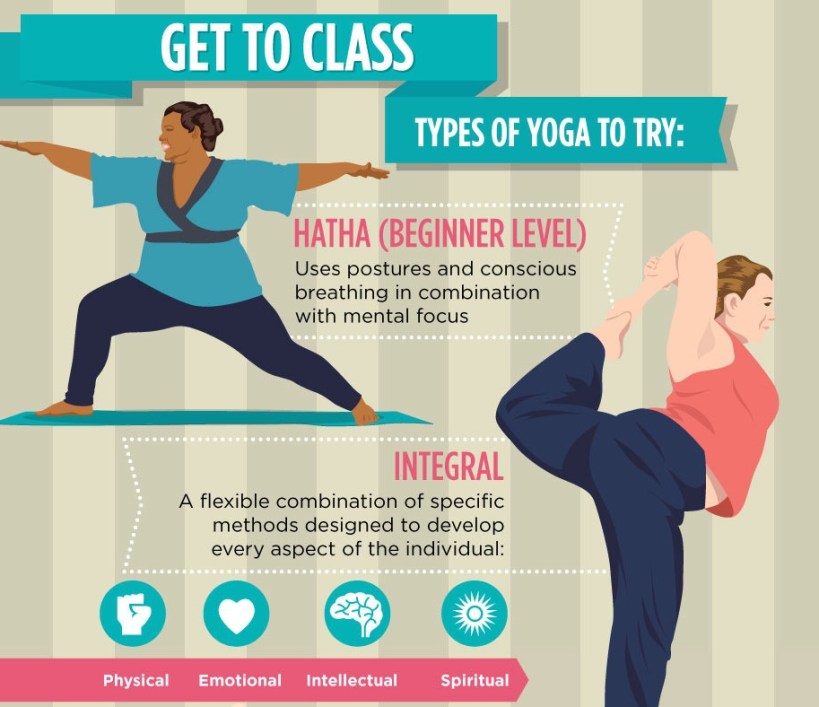
I recently received the following info-graphic for “Plus-Size Yoga” and wanted to share it with all of you. No matter your pant size – now or down the road – yoga is good for you. It feeds your physical body and psychological being in ways that allow you to feel better – crave healthier foods, have more energy, lose weight and live longer. This graphic does a great job at explaining some of the scientifically proven, medical benefits of a regular yoga practice, demonstrating specific postures which have real benefits for everyone, at all sizes. (Photo Credit and a BIG “Thanks” to Aldo Baker and Alight for spreading the word!)

I’ll check back in soon with my take on “juice cleansing” as a self-proclaimed once-a-day juicer and former juice bar employee (+ my own recipe for at-home juicing!). There’s no better place to take on the craze than out here in L.A. – I look forward to sharing what I’ve found!

Rock on,
Amy

plus-size-yoga